
How to Choose a Reputable Maine Coon Breeder in South Africa
Published on August 30, 2026 • Written by Kitten Kingdom Expert • 5 min read
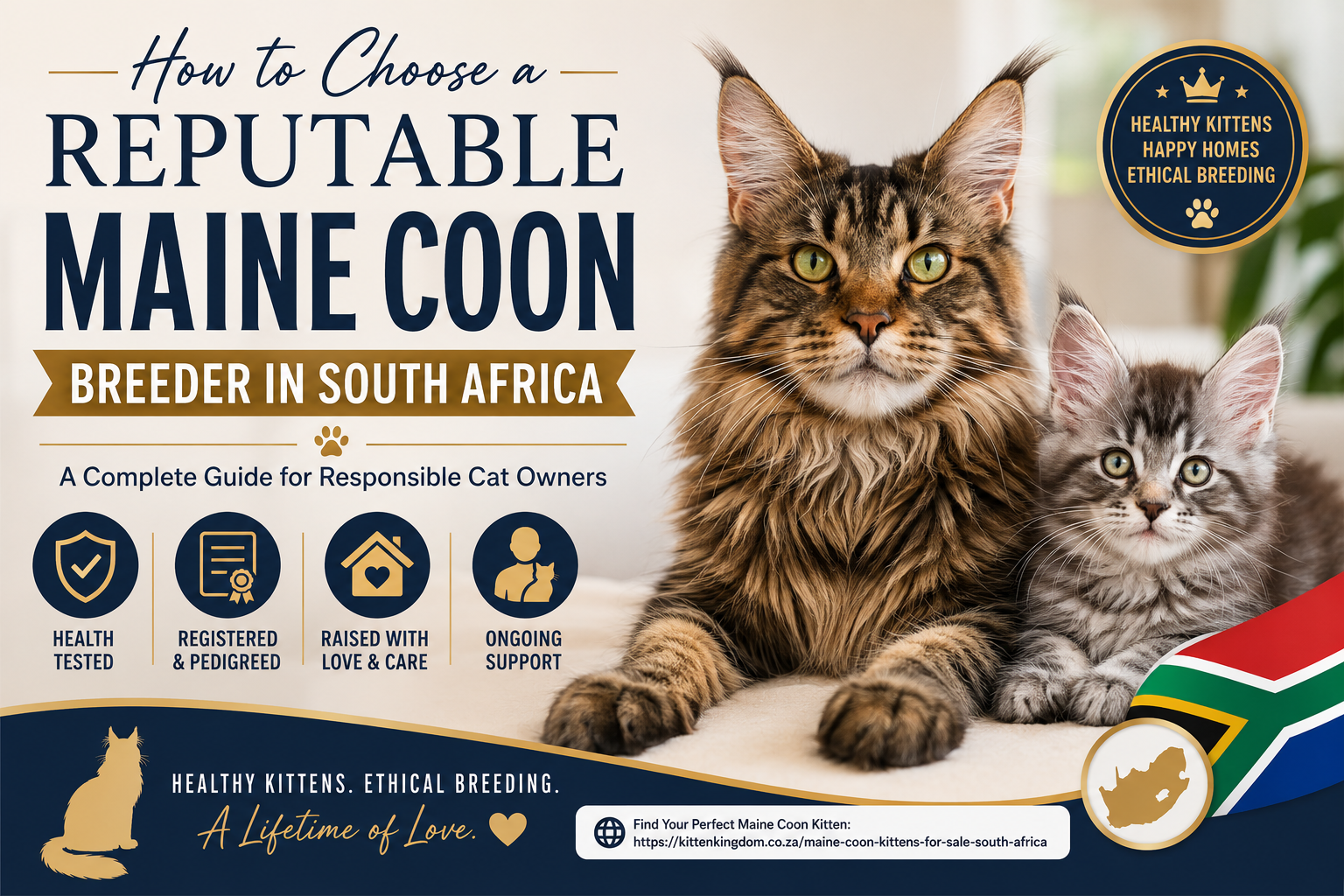
Choosing a Maine Coon kitten is an exciting decision, but finding the right Maine Coon breeder in South Africa requires more than simply searching for the cheapest kitten online. A responsible breeder should prioritise health, temperament, proper socialisation, ethical breeding practices and transparent documentation.
Maine Coons are known for their impressive size, affectionate personalities and distinctive long coats. They are also slow-maturing cats, with full maturity potentially taking several years. This makes choosing a responsible breeder especially important because the breeder's decisions can have a lasting impact on your kitten's health and temperament.
If you are researching available kittens, you can use Maine Coon kittens for sale in South Africa as a reference point while comparing breeders, kittens and the information they provide.
What Makes a Reputable Maine Coon Breeder?
A reputable breeder is not simply someone who has Maine Coon kittens available for sale. Responsible breeding involves carefully selecting healthy parent cats, maintaining appropriate living conditions, providing veterinary care and raising kittens in a suitable environment.
The Cat Federation of Southern Africa (CFSA) states that reputable breeders should prioritise healthy pedigreed cats and comply with applicable breeder and registration rules. CFSA also provides a Maine Coon breeder directory for South African buyers.
Similarly, the Southern Africa Cat Council (SACC) provides breeder information and encourages DNA testing as part of responsible breeding practices.
When evaluating a breeder, look for the following characteristics:
- Transparent health information
- Proper pedigree documentation
- Veterinary vaccination records
- Evidence of genetic testing
- Healthy and clean breeding environments
- Well-socialised kittens
- Clear contracts and adoption terms
- Willingness to answer questions
- Responsible breeding frequency
- Ongoing support after adoption
A good breeder should also be interested in you. Responsible breeders commonly ask prospective owners questions about their home, experience with cats and lifestyle because they want their kittens placed in appropriate homes.
1. Research the Breeder Before Paying a Deposit
One of the biggest mistakes prospective Maine Coon owners can make is sending money before researching the breeder.
Start by searching for the breeder or cattery online. Look for:
- An established website
- Consistent contact information
- Breeding history
- Independent reviews
- Registration information
- Clear photographs of the cats
- Health-testing information
- Pedigree information
- Previous kitten-owner experiences
South African cat organisations can also be useful starting points when researching breeders. SACC, for example, publishes information about active Maine Coon breeders, while CFSA maintains breed-specific breeder information.
However, registration should be considered one part of your investigation rather than the only deciding factor. You should still evaluate the breeder's health practices, facilities, documentation and communication.
2. Ask About Genetic Health Testing
Health testing is one of the most important considerations when choosing a Maine Coon breeder.
Maine Coons can be affected by several inherited conditions. One particularly important concern is hypertrophic cardiomyopathy (HCM), a heart disease associated with Maine Coons.
The International Cat Association (TICA) recommends that responsible Maine Coon breeders consider both genetic testing and periodic echocardiographic evaluation by an appropriately qualified veterinary cardiologist. TICA also notes that other screening may include hip dysplasia, luxating patella, spinal muscular atrophy (SMA) and pyruvate kinase deficiency.
The UC Davis Veterinary Genetics Laboratory also identifies a Maine Coon-associated HCM mutation and explains that genetic testing can help identify cats carrying that particular mutation.
Questions to ask the breeder
Before purchasing a kitten, ask:
- Have both parents been genetically tested?
- Can I see the test results?
- Have the breeding cats received veterinary cardiac evaluations?
- Are the parents screened for other relevant hereditary conditions?
- Can you provide documentation from the testing laboratory or veterinarian?
A breeder who says "the kittens are healthy" but refuses to provide any supporting information deserves additional scrutiny.
3. Verify the Kitten's Veterinary Records
A reputable breeder should be able to explain what veterinary care the kitten has received.
Depending on the kitten's age and veterinary recommendations, records may include:
- Vaccination information
- Deworming records
- Veterinary examination
- Microchip information, where applicable
- Health certificate
- Parasite-control information
- Other relevant medical documentation
For example, Kitten Kingdom's published FAQ states that its kittens receive core vaccinations at 8 and 12 weeks and that vaccination documentation is supplied to buyers. It also states that its breeding cats are DNA tested for several hereditary conditions.
When comparing breeders, don't simply accept verbal assurances. Ask to see the relevant documentation.
4. Examine the Living Conditions
If possible, visit the breeder or arrange a live video tour of the cattery.
Pay attention to:
- Cleanliness
- Ventilation
- Space available to cats
- Access to food and clean water
- General behaviour of the cats
- Interaction between kittens and people
- Signs of illness
- Whether kittens appear active and alert
- Whether adult breeding cats appear healthy
A responsible breeder should generally be comfortable discussing how their cats are housed and cared for.
If a seller refuses every reasonable request to verify the kittens' existence or living conditions, consider that a warning sign.
5. Look at the Kitten's Temperament
Maine Coons are generally recognised for their gentle, friendly and sociable temperament.
However, individual personality is influenced by genetics, early experiences and socialisation.
When meeting a kitten, look for one that is:
- Alert
- Curious
- Comfortable around people
- Active and appropriately playful
- Clean
- Well-fed
- Bright-eyed
- Free from obvious signs of illness
Don't assume that the largest kitten will automatically become the best Maine Coon. Size is only one characteristic of the breed.
A responsible breeder should be able to tell you about each kitten's personality and help match the kitten to your household.
6. Ask About the Parents
The parents can tell you a great deal about the breeding programme.
Ask to see photographs or, preferably, meet the parents when possible.
You should ask about:
- Their pedigree
- Their age
- Their health history
- Their temperament
- Genetic testing
- Previous litters
- Registration
- Their relationship to other cats in the breeding programme
Remember that responsible breeding is about quality and health rather than simply producing enormous cats.
A breeder who constantly advertises kittens using exaggerated claims such as "world's biggest Maine Coon" without providing meaningful information about health, pedigree or breeding practices should be approached carefully.
7. Check Pedigree and Registration Documentation
If you are purchasing a pedigreed Maine Coon, ask exactly what pedigree and registration documents accompany the kitten.
Depending on the breeder and registering organisation, documentation may include:
- Pedigree certificate
- Registration certificate
- Transfer-of-ownership documentation
- Vaccination record
- Health documentation
- Sales or purchase agreement
SACC's breeder information notes that buyers should ensure that important documentation, including pedigree and registration certificates and veterinary-signed vaccination records, is in order before adoption.
Don't hesitate to ask the breeder to explain any documents you don't understand.
8. Be Careful With Online Maine Coon Scams
Unfortunately, online kitten scams can make choosing a breeder more difficult.
CFSA specifically warns that scammers may steal kitten photographs from legitimate breeders' websites and social-media pages. It recommends checking photographs and verifying that contact information corresponds with breeder-registration records.
Potential warning signs include:
- Prices that seem unrealistically low
- Pressure to pay immediately
- Refusal to provide health records
- Refusal to arrange a video call
- Stolen or inconsistent photographs
- Multiple breeds advertised without clear breeding information
- Constantly changing phone numbers
- Payment requests to unrelated individuals
- Poorly written contracts
- Claims of guaranteed giant size
- No verifiable breeding history
A beautiful website does not automatically mean the seller is legitimate.
Before making a payment, independently verify the breeder's identity and information.
9. Don't Choose a Breeder Based Only on Price
The cheapest Maine Coon kitten is not necessarily the best value.
Responsible breeding involves expenses such as:
- Veterinary examinations
- Genetic testing
- Quality nutrition
- Vaccinations
- Parasite prevention
- Registration
- Appropriate housing
- Grooming
- Stud services or breeding expenses
- Emergency veterinary care
- Socialisation and kitten care
Instead of asking only "How much does the kitten cost?", ask:
"What is included in the price, and what evidence demonstrates that the kitten has been responsibly bred?"
When researching options, you can also review Maine Coon kittens for sale in South Africa to understand the type of information prospective buyers should consider when evaluating available kittens.
10. Ask About Socialisation
Maine Coon kittens should have opportunities to experience normal household sounds, handling and interaction with people.
Ask the breeder:
- Are kittens raised around people?
- Are they handled regularly?
- Have they experienced household noises?
- Have they interacted with other cats?
- Have they been exposed to children?
- How do you introduce kittens to new environments?
Early positive experiences can help kittens develop confidence.
A kitten that has received appropriate socialisation may find the transition into a new home easier.
11. Review the Buyer's Contract Carefully
A reputable breeder should provide clear terms.
The agreement may cover:
- Purchase price
- Deposit terms
- Health guarantees
- Registration
- Vaccination status
- Ownership transfer
- Breeding rights
- Spay/neuter requirements, where applicable
- Return or rehoming provisions
- Responsibilities of the buyer
Never sign a contract you don't understand.
Take your time, ask questions and make sure verbal promises are included in writing where appropriate.
12. Ask What Happens After You Take the Kitten Home
A responsible breeder's relationship with a buyer shouldn't necessarily end when payment is made.
Ask whether the breeder provides ongoing guidance about:
- Feeding
- Grooming
- Veterinary care
- Introducing the kitten to other pets
- Socialisation
- Litter training
- Breed-specific care
- Future questions or concerns
This ongoing support can be particularly valuable for first-time Maine Coon owners.
Maine Coon Breeder Checklist for South African Buyers
Before choosing a breeder, use this quick checklist:
QuestionWhat to Look ForIs the breeder transparent?Clear contact details and informationAre the parents healthy?Veterinary and health documentationIs genetic testing available?Documented test resultsIs HCM addressed?Genetic testing plus appropriate veterinary screeningAre kittens vaccinated?Veterinary vaccination recordsAre kittens socialised?Regular human interactionIs pedigree documentation provided?Verifiable registration/pedigreeCan you see the kittens?In-person or credible live video viewingIs there a contract?Clear written termsDoes the breeder ask questions?Interest in your suitability as an ownerIs payment pressure involved?Responsible breeders should allow reasonable verificationIs after-sale support available?Guidance after adoption
Questions to Ask a Maine Coon Breeder
Before placing a deposit, consider asking these 15 questions:
- How long have you been breeding Maine Coons?
- Are your cats registered with a recognised cat organisation?
- Can I see the kitten's parents?
- Can I see the parents' pedigrees?
- What genetic tests have been performed?
- Can I see the actual test certificates?
- Have the breeding cats undergone cardiac screening?
- What vaccinations will the kitten receive?
- Has the kitten been examined by a veterinarian?
- How are the kittens socialised?
- What food is the kitten currently eating?
- At what age can the kitten leave?
- What documentation comes with the kitten?
- Do you provide a written sales agreement?
- What support do you provide after the kitten goes home?
A breeder who welcomes sensible questions is generally easier to evaluate than one who becomes defensive or attempts to rush the sale.
Why Choosing the Right Breeder Matters
Your relationship with your Maine Coon can potentially last well over a decade. The decision you make before purchasing the kitten therefore matters enormously.
A responsible breeder aims to produce kittens with appropriate health, temperament and breed characteristics while prioritising the welfare of the cats involved.
TICA describes Maine Coons as gentle, friendly cats and notes that responsible breeders should consider important health concerns including HCM and certain hereditary and joint conditions.
For prospective South African buyers, Maine Coon kittens for sale in South Africa can serve as a useful reference while you research kittens and compare the information provided by breeders.
Final Thoughts: Finding the Best Maine Coon Breeder in South Africa
Finding a reputable Maine Coon breeder in South Africa requires patience and research. Don't make your decision based solely on photographs, price or the promise of a particularly large kitten.
Instead, investigate the breeder's reputation, inspect the kittens' environment, ask about the parents, verify health and genetic-testing documentation, check pedigree information and carefully review the purchase agreement.
Most importantly, never feel pressured to send a deposit before you are comfortable with the breeder and the kitten's documentation.
If you're beginning your search, you can use Kitten Kingdom's Maine Coon kittens for sale in South Africa as one reference point, while independently checking the breeder's credentials, health information and documentation before making your final decision.
Choosing carefully today can help you bring home a healthy, well-socialised Maine Coon and begin a rewarding relationship with your new companion.