
Maine Coon Grooming Guide: How to Keep Your Kitten’s Long Coat Healthy
Published on August 26, 2026 • Written by Kitten Kingdom Expert • 5 min read
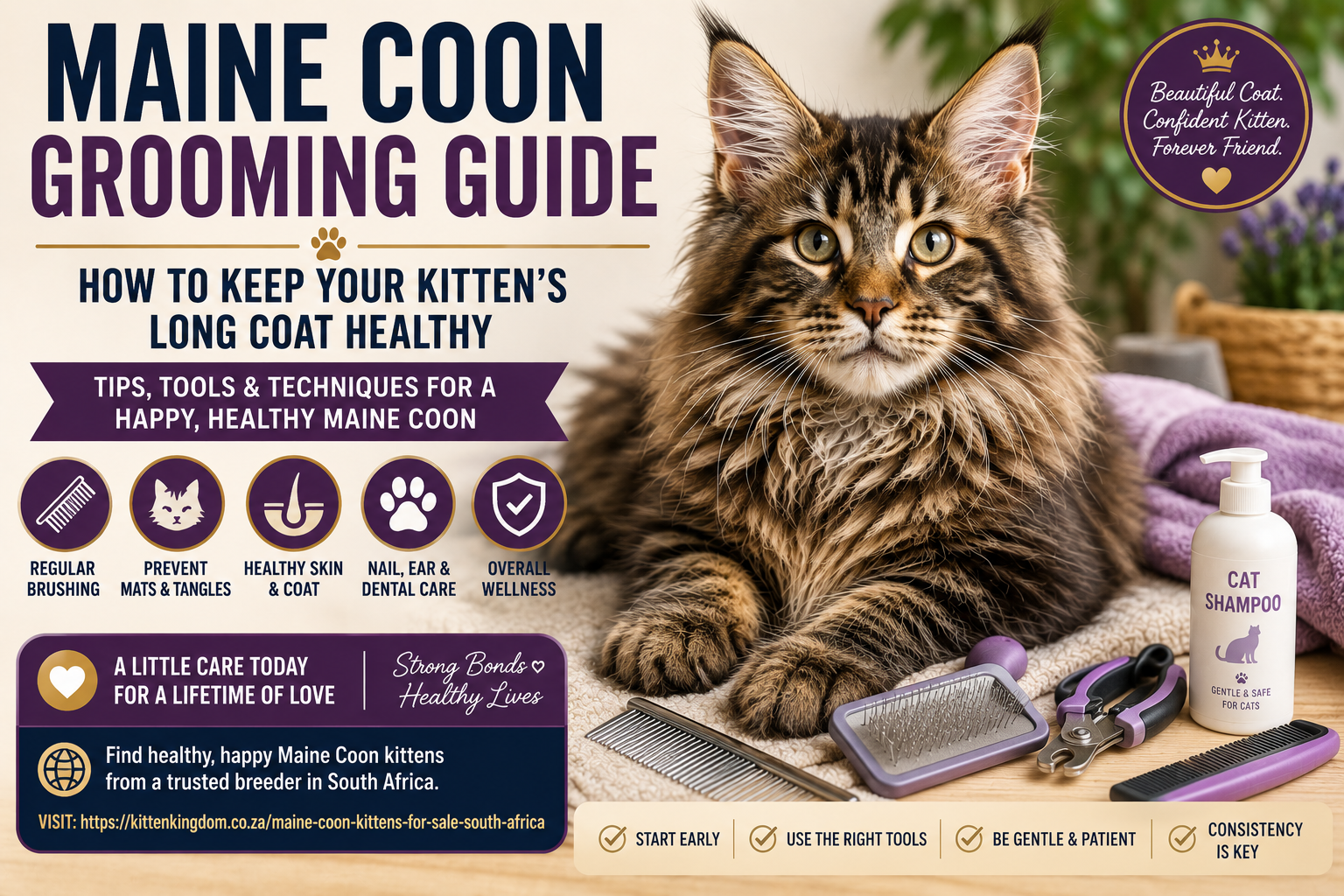
Maine Coon kittens are famous for their luxurious coats, fluffy tails, ear furnishings and distinctive ruffs. That beautiful appearance is one of the reasons the breed is so popular, but maintaining a healthy long coat requires a consistent grooming routine.
The good news is that Maine Coon grooming is usually more manageable than many new owners expect. The breed has a semi-long, shaggy coat rather than the extremely dense coat associated with some other long-haired breeds. TICA notes that a weekly combing is generally enough for many Maine Coons, although coat texture varies and some cats with softer or more cottony coats may need considerably more frequent grooming.
If you are researching Maine Coon kittens for sale in South Africa, grooming should be one of the care considerations you understand before bringing your kitten home.
This complete guide explains how to establish a grooming routine, which tools to use, how to prevent mats, how to manage shedding and how to keep your Maine Coon's skin and coat in excellent condition.
Understanding the Maine Coon Coat
The Maine Coon's coat is one of its defining characteristics.
According to TICA, the breed has a semi-long, glossy, water-resistant coat that tends to be shorter around the shoulders and longer around the ruff, stomach and hindquarters. The tail is particularly long and bushy.
The Cat Fanciers' Association similarly describes the mature Maine Coon as having a thick, luxurious coat with shorter hair around the shoulders and longer hair along the sides, stomach, back legs and tail.
Important areas to monitor include:
- Neck and ruff
- Behind the ears
- Under the front legs
- Chest
- Belly
- Inner hind legs
- Around the tail
- Britches
- Between the toes
These areas can develop tangles more easily because of friction and the length of the hair.
Do Maine Coon Kittens Need Daily Grooming?
Not necessarily.
The ideal grooming frequency depends on the individual kitten's coat texture, density and stage of development.
TICA says a weekly combing is usually sufficient for many Maine Coons, while some cats with cottonier, higher-maintenance coats may require daily combing.
The CFA recommends combing Maine Coon cats approximately two or three times per week to help control shedding, prevent hairballs and protect against matting.
For a kitten, the most important goal is not simply removing loose hair. It is teaching the kitten to calmly accept grooming.
A practical starting routine is:
Short sessions + gentle handling + positive rewards + consistency.
Why You Should Start Grooming Your Maine Coon Kitten Early
One of the biggest grooming mistakes owners make is waiting until a kitten develops a full adult coat before introducing a brush.
TICA recommends introducing grooming during kittenhood and making regular brushing part of the cat's routine.
Early grooming helps your kitten become comfortable with:
- Brushes
- Combs
- Paw handling
- Nail trimming
- Ear checks
- Face handling
- Tooth brushing
- Being gently restrained
TICA's kitten socialisation guidance also recommends introducing brushing for short periods and gradually building the kitten's comfort with grooming-related handling.
A simple kitten introduction
Start with a few minutes.
- Let the kitten inspect the comb.
- Allow it to sniff the grooming tool.
- Gently stroke the body with your hand.
- Introduce the comb with a few light passes.
- Reward calm behaviour.
- Stop before the kitten becomes frustrated.
- Repeat regularly.
The goal is to make grooming feel like a normal part of everyday life.
The Best Grooming Tools for a Maine Coon Kitten
You do not need a huge collection of grooming equipment.
A few high-quality tools are generally more useful than purchasing dozens of unnecessary brushes.
1. Stainless-Steel Comb
A quality metal comb is one of the most useful tools for a Maine Coon.
CFA recommends a suitable metal comb for long-haired kittens, while its grooming guidance notes that a wide-toothed comb should be long enough to reach through the coat toward the skin.
A good comb allows you to identify small tangles that may not be visible when simply looking at the surface of the coat.
2. Slicker Brush
A gentle slicker brush can help remove loose hair and surface tangles.
Use it carefully. Excessive pressure can irritate the skin.
3. Smaller Grooming Comb
A smaller comb can be useful around:
- Face
- Ears
- Legs
- Small areas of the body
CFA specifically notes that smaller combs can be useful for legs and fuzzy areas around the head.
4. Nail Clippers
Maine Coon kittens need regular nail maintenance.
TICA notes that kitten nails generally need more frequent trimming than adult nails, with weekly trimming suggested during kittenhood and less frequent trimming as the cat matures.
5. Cat Toothbrush
Dental care should also become part of your kitten's routine.
TICA recommends regular tooth brushing as part of Maine Coon care.
How to Brush a Maine Coon Kitten Correctly
The most effective approach is gentle, methodical and patient.
Step 1: Choose the right time
Brush your kitten when it is calm.
Avoid starting a grooming session immediately after intense play or when the kitten is already overstimulated.
Step 2: Start with easy areas
Begin with the shoulders and back.
These areas are usually easier for a kitten to accept than the belly or legs.
Step 3: Follow the direction of the coat
Use gentle strokes following the natural direction of the hair.
Step 4: Work through the coat systematically
Move gradually toward:
- Sides
- Chest
- Ruff
- Belly
- Legs
- Hindquarters
- Tail
Step 5: Check the skin
Part the hair occasionally and inspect the skin for:
- Redness
- Flaking
- Parasites
- Scabs
- Bald patches
- Irritation
- Unusual lumps
Step 6: Finish positively
Offer praise, affection or an appropriate reward.
Your kitten should gradually learn that grooming is a safe and predictable experience.
How to Prevent Mats in a Maine Coon Coat
Mats form when loose and living hairs become tangled together.
They can begin as tiny knots that are difficult to notice.
TICA explains that neglected loose coat can contribute to tangles, while regular brushing or combing helps remove shedding hair and keep the coat in good condition.
Areas most likely to mat include:
- Behind the ears
- Armpits
- Belly
- Inner legs
- Around the collar area
- Under the tail
CFA similarly advises that grooming tools should reach through the coat rather than simply brushing the surface because mats can develop closer to the skin.
What Should You Do If Your Maine Coon Has a Mat?
Never aggressively pull a large mat.
Pulling can hurt the skin and make your kitten associate grooming with pain.
For a small, loose tangle:
- Separate the surrounding hair.
- Hold the hair near the skin to reduce pulling.
- Gently work the tangle apart with your fingers or a suitable comb.
- Stop if the kitten becomes uncomfortable.
For large, tight or skin-level mats, professional help is safer.
TICA recommends using an experienced cat groomer when mats have already formed and explains that trained groomers can safely remove problematic tangles.
Do not use household scissors close to the skin. Cat skin can be accidentally cut very easily.
Maine Coon Shedding: What Owners Should Expect
Maine Coons shed, and seasonal changes can make loose fur more noticeable.
CFA notes that fluffy cats may appear to shed in clumps or "tumbleweeds" rather than leaving individual short hairs everywhere. It also notes that shedding can become more noticeable during seasonal coat changes.
Regular grooming helps remove loose hair before it ends up:
- On furniture
- On clothing
- On bedding
- On carpets
- In your kitten's stomach after self-grooming
However, grooming should not be used to try to eliminate normal shedding completely.
Shedding is a normal part of the feline hair cycle.
Does Grooming Reduce Hairballs?
It can help reduce the amount of loose hair your kitten ingests.
Cats naturally groom themselves by licking their coats. When they swallow loose hair, some of it can accumulate in the digestive tract and contribute to hairballs.
TICA explains that removing dead coat through brushing and combing can assist with shedding and reduce the amount of loose hair available to be swallowed.
If your cat repeatedly vomits hairballs, stops eating, becomes constipated or shows other concerning symptoms, speak with your veterinarian rather than assuming grooming alone will solve the problem.
Should You Bathe a Maine Coon Kitten?
Generally, routine bathing is not necessary for every Maine Coon.
The breed has a naturally water-resistant coat, and healthy cats are normally capable of maintaining much of their own cleanliness. TICA notes that Maine Coons often tolerate or even enjoy water, while CFA says most Maine Coons do not require regular bathing.
A bath may be appropriate when:
- The coat becomes unusually dirty
- The kitten gets into something unsafe
- A veterinarian recommends bathing
- A professional groomer determines it is necessary
- A specific medical shampoo has been prescribed
Important bathing rule
Only use products specifically formulated for cats unless your veterinarian instructs you otherwise.
Human shampoos can be unsuitable for feline skin and may cause irritation.
How to Keep Your Maine Coon's Coat Healthy
A beautiful coat starts with overall health.
CFA notes that coat quality is influenced by grooming and proper nutrition.
Focus on these fundamentals:
Balanced nutrition:
Feed a complete and balanced diet appropriate for your kitten's age and developmental stage.
Hydration:
Ensure fresh water is always available.
Parasite prevention:
Follow your veterinarian's recommendations for flea and parasite control.
Veterinary care:
Regular health examinations can identify skin, nutritional or systemic problems that affect coat condition.
Stress management:
Sudden changes in grooming behaviour or coat condition can sometimes accompany illness or stress.
Regular grooming:
Consistent combing prevents loose hair from accumulating and allows early detection of skin abnormalities.
Maine Coon Grooming and Nutrition
A healthy coat is closely connected to overall nutrition.
Your Maine Coon kitten needs a diet that supplies appropriate amounts of:
- Protein
- Essential fats
- Vitamins
- Minerals
- Water
Avoid adding supplements simply because you want to improve coat appearance.
Too much of certain nutrients can be harmful, and supplements should only be used when recommended by a veterinarian.
If your kitten develops a dull coat, excessive shedding, flaky skin or sudden changes in hair quality, consult a veterinarian rather than assuming that a supplement is needed.
Grooming Your Maine Coon's Ears
The large ears of the Maine Coon are one of the breed's most distinctive features.
Check them regularly.
Healthy ears should not have:
- Strong odour
- Excessive discharge
- Significant redness
- Swelling
- Persistent scratching
Do not routinely insert cotton swabs deep into the ear canal.
If you notice abnormal discharge, persistent head shaking or discomfort, have your kitten examined by a veterinarian.
Maine Coon Paw and Nail Care
Maine Coons have large, tufted paws.
Their nails should be checked regularly.
TICA recommends more frequent nail trimming during kittenhood, approximately once a week, with adult intervals commonly extending to every two to three weeks depending on the individual cat.
When trimming:
- Use cat-specific nail clippers.
- Trim only the sharp tip.
- Avoid the pink quick.
- Work slowly.
- Reward calm behaviour.
If you are uncomfortable trimming nails, ask your veterinarian or professional cat groomer to demonstrate the correct technique.
Dental Grooming for Maine Coon Kittens
Dental care should begin early.
Introducing a toothbrush while your kitten is young can make future dental maintenance considerably easier.
TICA recommends regular tooth brushing for Maine Coons and advises owners to consult their veterinarian for appropriate instructions and products.
Start gradually:
- Let the kitten smell the toothbrush.
- Touch the lips gently.
- Introduce a tiny amount of cat-safe toothpaste.
- Brush briefly.
- Reward your kitten.
- Gradually increase duration.
Never force a frightened kitten into a prolonged dental session.
How Often Should You Groom a Maine Coon Kitten?
There is no single schedule that works for every Maine Coon.
A practical routine can look like this:
Grooming taskSuggested frequencyCoat combing1–3 times weekly, depending on coatMat inspectionSeveral times weeklyNail checksWeeklyNail trimmingAs needed; often weekly in kittensEar checksWeekly or as neededDental careRegularly, ideally several times weekly or as advisedProfessional groomingAs neededBathingOnly when necessary
CFA recommends combing Maine Coons two or three times a week, while TICA notes that some coats require only weekly grooming and others need more frequent attention.
The important principle is to adapt the schedule to your kitten's individual coat.
Maine Coon Grooming During Seasonal Shedding
Seasonal coat changes can increase the amount of loose hair around your home.
During heavier shedding periods, you may need to increase grooming frequency.
Watch particularly closely for:
- Small knots
- Increased loose hair
- Matt formation
- Hair around the ears
- Tangles in the armpits
- Belly mats
- Tail tangles
CFA notes that seasonal changes can make shedding more noticeable in fluffy cats.
Rather than waiting for visible mats, increase preventative combing when you notice shedding increasing.
How to Make Grooming Enjoyable for Your Kitten
Grooming does not have to become a struggle.
Use positive reinforcement.
Try this routine:
Short sessions:
Five minutes can be enough for a young kitten.
Reward calm behaviour:
Praise or offer an appropriate treat after grooming.
Stay consistent:
A predictable routine makes grooming less intimidating.
Use gentle pressure:
Never scrape or aggressively pull through the coat.
Stop when necessary:
If your kitten becomes highly distressed, end the session and try again later.
TICA's kitten socialisation guidance recommends short, positive grooming exposure to help kittens become comfortable with brushing and other forms of handling.
Common Maine Coon Grooming Mistakes to Avoid
Mistake 1: Brushing only the surface
A beautiful top layer can hide mats underneath.
Use a suitable comb that can work through the coat toward the skin without causing discomfort.
Mistake 2: Waiting until the coat is matted
Prevention is much easier than removing established mats.
Mistake 3: Pulling tangles aggressively
This can cause pain and make your kitten fearful of grooming.
Mistake 4: Using human grooming products
Use products formulated specifically for cats unless your veterinarian recommends otherwise.
Mistake 5: Over-bathing
Healthy Maine Coons generally do not require frequent baths.
Mistake 6: Ignoring skin changes
A grooming session is an opportunity to notice abnormalities early.
Mistake 7: Grooming only when the cat looks dirty
Regular grooming is preventive care, not merely cosmetic maintenance.
When Should You Use a Professional Cat Groomer?
Professional grooming can be particularly useful when:
- Your Maine Coon has severe mats
- Your cat strongly resists grooming
- You need help establishing a grooming routine
- The coat has become excessively tangled
- You need a professional bath
- You are unsure how to trim nails safely
TICA explains that experienced cat groomers can help remove dead coat and safely deal with established mats and tangles.
Choose a groomer who has specific experience handling cats, particularly large long-haired breeds.
Should You Shave a Maine Coon?
Routine shaving is generally unnecessary.
The Maine Coon's coat serves important protective and insulating functions, and TICA describes its coat as an all-weather coat adapted to the breed's origins.
If severe matting, a medical condition or another legitimate reason makes clipping necessary, it is better to have the procedure performed or supervised by an experienced professional.
Do not shave your Maine Coon simply because it sheds.
Regular grooming is usually a better approach.
Maine Coon Grooming in South Africa
South African owners should consider their local climate and the cat's living environment when developing a grooming routine.
Maine Coons can adapt to indoor living, but their long coats still require regular monitoring.
During warmer periods, owners may notice more shedding or changes in coat density.
Provide:
- Fresh drinking water
- Cool resting areas
- Good ventilation
- Shade from direct sunlight
- Regular grooming
- Appropriate indoor enrichment
Avoid assuming that shaving is necessary simply because temperatures rise.
If you are researching Maine Coon kittens for sale in South Africa, ask the breeder about the kitten's existing grooming routine and coat texture so you can continue the routine after bringing your kitten home.
Grooming Checklist for New Maine Coon Owners
Before bringing your kitten home, prepare:
- Stainless-steel grooming comb
- Gentle slicker brush
- Small comb for face and legs
- Cat nail clippers
- Cat toothbrush
- Cat-safe toothpaste
- Suitable cat shampoo for occasional use
- Comfortable grooming area
- Treats or rewards
- Veterinarian contact information
Keep grooming equipment in an easily accessible location so that grooming remains a consistent part of your kitten's routine.
Maine Coon Grooming Schedule
Daily
A full grooming session is not necessarily required.
Instead, spend a few moments handling your kitten gently and checking areas that are prone to tangling.
Several times per week
Perform a proper coat-combing session.
Pay special attention to:
- Ruff
- Armpits
- Belly
- Hind legs
- Tail
Weekly
Check:
- Nails
- Ears
- Skin
- Coat condition
- Teeth
Monthly and as needed
Review your kitten's overall grooming routine and determine whether the coat requires professional attention.
Remember that the correct frequency depends on the individual coat.
How to Choose a Healthy Maine Coon Kitten's Coat
If you are buying a kitten, grooming can also provide useful clues about general condition.
TICA's kitten-buying guidance recommends looking for a kitten with good muscle tone, a clean coat, bright clear eyes and healthy-looking skin, without bald patches or obvious dryness.
A prospective buyer should therefore pay attention to:
- Coat cleanliness
- Skin condition
- Excessive flaking
- Bald patches
- Parasites
- Unusual odour
- General body condition
- Activity level
A beautiful photograph is not a substitute for health information.
Maine Coon Grooming and Your Breeder
When searching for Maine Coon kittens for sale in South Africa, ask the breeder about grooming before purchasing.
Useful questions include:
- How often are the kittens groomed?
- Are they accustomed to combing?
- Which grooming tools do you use?
- How often are their nails trimmed?
- Have the kittens been introduced to dental care?
- What type of coat do the parents have?
- Does this bloodline tend to produce high-maintenance coats?
- What grooming routine do you recommend after adoption?
A breeder who regularly handles and grooms kittens can help make the transition to a new home much easier.
Frequently Asked Questions About Maine Coon Grooming
How often should I brush my Maine Coon kitten?
Many Maine Coons can be maintained with weekly grooming, while CFA recommends combing approximately two or three times per week. Cats with softer, more cottony coats may require daily attention.
Do Maine Coon kittens shed a lot?
They shed normally as part of the feline hair cycle, and seasonal coat changes can make shedding more noticeable. Regular combing helps remove loose hair before it accumulates around your home or is swallowed during self-grooming.
Do Maine Coon kittens need baths?
Usually not on a regular schedule. Most healthy Maine Coons do not require routine bathing unless their coat becomes unusually dirty or a veterinarian recommends it.
What is the best brush for a Maine Coon?
A quality stainless-steel comb is an excellent foundation. A gentle slicker brush can also be useful depending on the individual coat. The important point is choosing tools that can reach through the coat without damaging the skin.
How do I prevent mats?
Regularly comb the entire coat, paying particular attention to the armpits, belly, hind legs, ruff and tail. Prevention is considerably easier than removing large, established mats.
Should I shave my Maine Coon in summer?
Routine shaving is generally unnecessary. The Maine Coon has an all-weather coat, and regular grooming is usually preferable to shaving.
Can I cut a Maine Coon's mats myself?
Small loose tangles may sometimes be carefully worked apart, but tight mats close to the skin should be handled by an experienced cat groomer or veterinarian. Avoid using scissors close to the skin.
Final Thoughts: Keeping Your Maine Coon's Coat Beautiful and Healthy
A Maine Coon's magnificent coat is one of the breed's greatest attractions, but keeping it healthy does not require complicated grooming equipment or hours of work every day.
The most effective approach is consistent, gentle and preventative.
Start grooming during kittenhood. Use an appropriate metal comb, check areas that are prone to mats, maintain the nails and introduce dental care early. Adjust grooming frequency according to your individual kitten's coat texture and shedding pattern.
TICA and CFA both emphasise regular grooming for Maine Coons, with typical recommendations ranging from weekly grooming to two or three sessions per week depending on coat characteristics.
If you are considering Maine Coon kittens for sale in South Africa, ask the breeder about the kitten's grooming history and coat type before bringing it home.
A well-established grooming routine will do more than keep your Maine Coon looking beautiful. It can help prevent painful mats, reduce loose hair, support comfortable skin and give you regular opportunities to notice changes in your kitten's health.
With the right tools, patience and consistency, grooming can become a relaxing bonding experience that your Maine Coon learns to enjoy throughout its life.
Always consult a qualified veterinarian for advice about skin conditions, excessive shedding, parasites, persistent hairballs or any other health concern affecting your kitten.