
Maine Coon Kitten Diet & Nutrition Guide: What Should Your Kitten Eat?
Published on August 28, 2026 • Written by Kitten Kingdom Expert • 5 min read
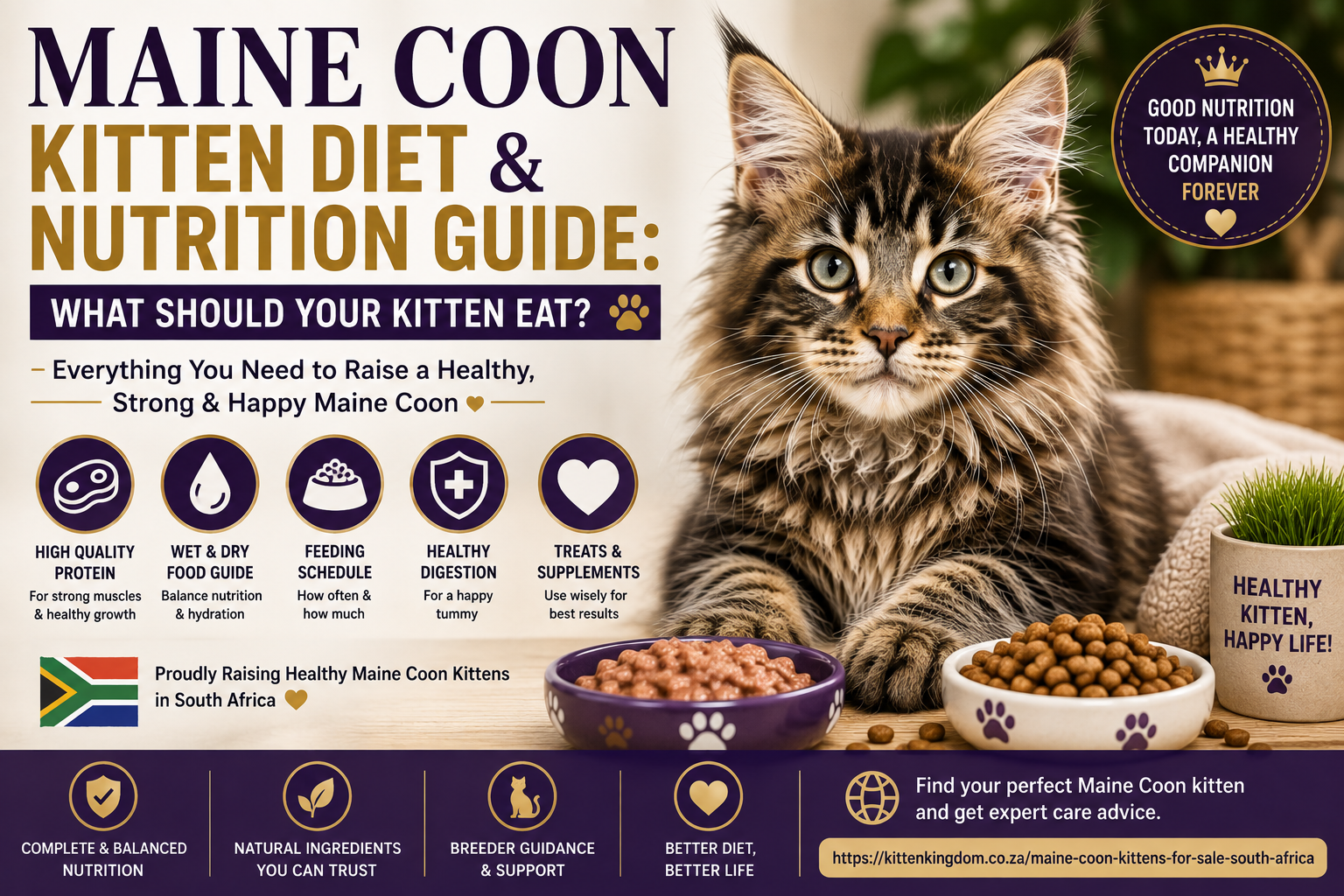
Maine Coon kittens are known for their impressive size, gentle personalities, luxurious coats and slow, steady development. Because they are a large breed that can continue maturing for several years, nutrition is an important part of helping a Maine Coon kitten develop into a healthy adult cat.
Choosing the right food, however, is not simply about finding the product with the highest protein percentage or the most attractive packaging. A successful Maine Coon kitten diet should provide complete and balanced nutrition, appropriate calories, adequate hydration and the nutrients required for healthy growth.
If you are considering Maine Coon kittens for sale in South Africa, understanding their nutritional requirements before bringing one home can help you establish a healthy routine from the beginning.
This comprehensive guide covers what Maine Coon kittens should eat, how often they should be fed, wet versus dry food, portion control, hydration, treats, supplements and common nutritional mistakes.
Why Proper Nutrition Matters for Maine Coon Kittens
Kittenhood is one of the most important developmental periods in a cat's life.
During this stage, your Maine Coon requires nutrients to support:
- Healthy muscle development
- Strong bones and joints
- Brain and nervous-system development
- Immune-system function
- Healthy skin and coat
- Normal organ development
- Energy and activity
- Healthy body composition
Maine Coons are particularly interesting because they mature more slowly than many other domestic cat breeds. This means owners should focus on healthy, controlled growth rather than trying to make their kitten as large as possible as quickly as possible.
Overfeeding can lead to excessive weight gain, while inadequate nutrition can interfere with normal development.
The goal is balanced growth.
What Should a Maine Coon Kitten Eat?
The primary food should be a complete and balanced kitten diet specifically formulated for growth.
Look for food that is appropriate for kittens rather than simply choosing an adult cat food.
A quality kitten diet should provide appropriate levels of:
- High-quality protein
- Fat
- Essential amino acids
- Essential fatty acids
- Vitamins
- Minerals
- Taurine
- Appropriate calories
- Adequate moisture
Cats have nutritional requirements that differ significantly from dogs and humans. Therefore, a Maine Coon kitten should receive food formulated specifically for feline nutritional needs.
When comparing different foods, do not rely solely on phrases such as "premium," "natural," "holistic" or "grain-free." Nutritional adequacy and appropriate formulation are much more important.
Protein in a Maine Coon Kitten Diet
Protein is particularly important during kittenhood because your Maine Coon is building muscle and other tissues.
Cats are obligate carnivores, and animal-derived nutrients are important components of appropriate feline nutrition.
However, feeding an extremely high-protein diet does not automatically produce a healthier or larger Maine Coon.
The overall nutritional balance matters.
A professionally formulated kitten food should provide the appropriate combination of protein, fat, amino acids, vitamins and minerals required during growth.
If you are considering a homemade or raw diet, speak with a veterinarian or qualified veterinary nutrition professional before making the change.
Wet Food vs Dry Food for Maine Coon Kittens
One of the most common questions from new Maine Coon owners is whether kittens should eat wet food or dry food.
The good news is that both can have a place in a properly planned diet.
Wet Food
Wet cat food contains substantially more moisture than dry kibble.
This can be particularly useful for increasing overall water consumption.
Potential benefits include:
- High moisture content
- Appealing texture
- Strong palatability
- Useful for kittens that prefer softer food
- Additional dietary water
Wet food should still be complete and balanced for kitten growth if it is being used as a significant part of the diet.
Dry Food
Complete kitten kibble can also provide appropriate nutrition when it is formulated for growth.
Advantages can include:
- Convenient storage
- Easy portion measurement
- Simple feeding
- Useful for food puzzles
- Convenient for owners
Dry food is also more calorie-dense than most wet foods, so portions should be measured carefully.
Can Maine Coon Kittens Eat Both?
Yes.
Many owners choose a combination of wet and dry food.
Combination feeding can provide dietary variety while allowing owners to benefit from the convenience of kibble and the additional moisture provided by wet food.
The important point is that the combined daily amount should be appropriate.
If you provide the full recommended serving of dry food plus the full recommended serving of wet food, you may accidentally overfeed your kitten.
How Often Should You Feed a Maine Coon Kitten?
Young kittens generally do better with multiple smaller meals rather than one or two very large meals.
The exact feeding frequency depends on:
- Age
- Body size
- Activity level
- Food calorie density
- Individual growth rate
- Veterinary recommendations
A young kitten may need several meals throughout the day, while an older kitten can gradually move toward a less frequent feeding schedule.
Consistency is important.
Try to feed meals at approximately the same times each day so your kitten develops a predictable routine.
How Much Should a Maine Coon Kitten Eat?
There is no universal portion size that is correct for every Maine Coon kitten.
Even kittens of the same age can have different nutritional requirements.
Portion requirements can be affected by:
- Weight
- Growth rate
- Activity level
- Food formulation
- Calorie density
- Neutering status
- Individual metabolism
- Health
Use the manufacturer's feeding recommendations as a starting point, then monitor your kitten's weight and body condition.
Your veterinarian can help determine whether the amount should be increased or decreased.
Remember:
A larger appetite does not necessarily mean your kitten needs unlimited food.
Maine Coons are naturally large cats, but excessive body fat is not healthy development.
Should You Free-Feed a Maine Coon Kitten?
Free-feeding involves leaving food available throughout the day.
Some cats can regulate their intake effectively, but others will consume more calories than they need when food is constantly available.
Measured meals make it easier to monitor:
- Appetite
- Daily calorie intake
- Weight gain
- Feeding behaviour
- Changes in eating habits
This is especially useful during kittenhood because nutritional requirements change as the cat grows.
If your veterinarian recommends free-choice feeding for your particular kitten, follow that professional advice.
Healthy Growth Is More Important Than Maximum Size
One of the biggest misconceptions about Maine Coon nutrition is that owners should feed as much as possible because the breed is large.
This approach can be counterproductive.
Your objective should be healthy growth, not rapid growth.
An overweight kitten may experience unnecessary stress on developing bones and joints.
Instead of asking:
"How can I make my Maine Coon as big as possible?"
ask:
"How can I help my Maine Coon grow at a healthy rate?"
Regular veterinary examinations and body-condition assessments are valuable for answering this question.
Hydration and Maine Coon Kitten Nutrition
Water is an essential part of a healthy Maine Coon kitten diet.
Your kitten should have access to fresh, clean drinking water at all times.
Consider providing:
- Multiple water bowls
- A cat water fountain
- Fresh water throughout the day
- Wet food
- Clean bowls positioned away from litter boxes
Some Maine Coon kittens are fascinated by running water and may enjoy drinking from a fountain.
However, playing with water is not necessarily an indication that your kitten is drinking enough.
Always monitor water availability.
How Wet Food Can Support Hydration
Wet food contains significantly more water than dry kibble.
For some cats, incorporating wet food into the daily diet can be an effective way to increase water intake.
This does not mean every Maine Coon must eat wet food.
A complete and balanced dry diet can also be nutritionally appropriate.
The important consideration is ensuring your kitten consumes sufficient water and receives nutritionally complete food.
Maine Coon Kitten Nutrition and Healthy Bones
Maine Coon kittens develop substantial skeletal structures, so balanced nutrition is particularly important during growth.
Do not assume that adding extra calcium or minerals will automatically make your kitten's bones stronger.
Too much of certain nutrients can be just as problematic as too little.
A complete kitten food should already contain appropriately balanced nutrients for growth.
Avoid adding supplements unless recommended by your veterinarian.
This is particularly important with growing kittens because their nutritional requirements are more precise than those of adult cats.
Essential Fats and Maine Coon Coat Health
Maine Coons are famous for their beautiful long coats.
A healthy diet provides essential nutrients that contribute to normal skin and coat development.
Dietary fats provide energy and supply essential fatty acids.
However, adding oils or supplements simply because you want a shinier coat is not always appropriate.
If your kitten develops:
- Excessive dandruff
- Dry skin
- Hair loss
- Excessive shedding
- Bald patches
- Persistent itching
- A dull coat
consult your veterinarian.
Coat problems can have many causes beyond nutrition.
How Many Calories Does a Maine Coon Kitten Need?
Calorie requirements vary considerably between individual kittens.
A growing kitten generally requires more calories relative to body weight than an adult cat, but requirements change as the kitten gets older.
Rather than calculating calories independently, start with the feeding recommendations provided by the food manufacturer and discuss adjustments with your veterinarian.
When combining wet and dry foods, always consider their individual calorie densities.
For example:
If your kitten receives calories from wet food, the amount of dry food may need to be reduced accordingly.
This prevents accidental overfeeding.
Treats for Maine Coon Kittens
Treats can be useful for:
- Training
- Socialisation
- Grooming
- Handling exercises
- Positive reinforcement
- Bonding
However, treats should remain a small part of your kitten's overall diet.
Too many treats can contribute unnecessary calories and may reduce the nutritional balance of the main diet.
Choose treats designed for cats and offer them in small portions.
Avoid making treats a substitute for complete kitten food.
Can Maine Coon Kittens Eat Human Food?
A small amount of certain plain foods may be tolerated by cats, but human food should not become a major component of a growing kitten's diet.
Some foods commonly found in human households can also be dangerous to cats.
Avoid foods containing ingredients such as:
- Chocolate
- Onions
- Garlic
- Alcohol
- Caffeine
- Certain artificial sweeteners
- Grapes and raisins
When in doubt, ask your veterinarian before giving a new food to your kitten.
Should Maine Coon Kittens Drink Milk?
A common misconception is that cats need cow's milk.
A properly weaned Maine Coon kitten does not need cow's milk as part of its diet.
Many cats have difficulty digesting lactose, and milk can result in digestive upset.
Fresh water should be the primary drinking option.
If a very young orphaned kitten requires milk, use an appropriate kitten milk replacer under veterinary guidance.
Raw Feeding and Maine Coon Kittens
Raw feeding has become increasingly popular among some pet owners, but it should not be approached casually.
Growing kittens have precise nutritional requirements, and an improperly formulated raw diet can result in nutritional deficiencies or excesses.
There are also potential food-safety concerns associated with raw animal products.
If you are considering raw feeding, speak to your veterinarian or a qualified veterinary nutritionist before introducing the diet.
The most important requirement is that the final diet is safe, complete and nutritionally balanced for growth.
Homemade Diets for Maine Coon Kittens
Homemade diets may appear simple.
For example, an owner might assume that meat, eggs and vegetables are enough.
They are not necessarily nutritionally complete for a growing cat.
Cats require specific amounts of nutrients such as taurine, calcium, phosphorus, essential fatty acids and certain vitamins and amino acids.
A homemade diet should therefore be professionally formulated rather than based on a generic internet recipe.
Choosing the Right Kitten Food
When comparing commercial kitten foods, consider the following:
1. Life-stage suitability
Choose food specifically formulated for kittens or growth.
2. Nutritional completeness
Look for a complete and balanced diet rather than a complementary food intended only as a treat or topper.
3. Manufacturer transparency
Choose manufacturers that provide clear nutritional information and appropriate quality-control information.
4. Calorie information
Knowing the calorie density makes portion management easier.
5. Your veterinarian's recommendation
Your veterinarian can help determine whether a particular food is appropriate for your individual kitten.
How to Change Your Maine Coon Kitten's Food
Do not abruptly switch foods unless there is a specific veterinary reason to do so.
Sudden dietary changes can cause digestive problems in some kittens.
A gradual transition is usually preferable.
Example transition:
Days 1–3: 75% current food + 25% new food
Days 4–6: 50% current food + 50% new food
Days 7–9: 25% current food + 75% new food
Day 10: 100% new food
If your kitten experiences digestive upset, slow the transition.
If vomiting, severe diarrhoea, appetite loss or other concerning symptoms occur, contact your veterinarian.
Feeding a Maine Coon Kitten After Bringing It Home
When purchasing Maine Coon kittens for sale in South Africa, ask the breeder what the kitten has been eating before making any changes.
Ideally, obtain information about:
- Food brand
- Wet food type
- Dry food type
- Feeding schedule
- Portion size
- Treats
- Feeding preferences
- Any known sensitivities
You can then maintain the existing routine initially.
If you later decide to change the diet, make the transition gradually.
For families researching Maine Coon kittens for sale in South Africa, obtaining detailed feeding information from the breeder is one of the simplest ways to make the kitten's first few days at home more comfortable.
Feeding Maine Coon Kittens in South Africa
South Africa's climate can vary significantly between regions.
During hot weather, hydration and access to cool areas become particularly important.
Make sure your Maine Coon kitten has:
- Fresh water
- Good ventilation
- A comfortable resting area
- Shade
- Appropriate indoor temperatures
- Regular meals
- A clean feeding area
Owners in warmer regions should pay particular attention to changes in appetite, drinking behaviour and energy levels.
If your kitten suddenly stops eating or drinking, seek veterinary advice.
Maine Coon Kitten Diet and Exercise
Nutrition should always be considered alongside activity.
Maine Coon kittens are naturally playful and benefit from opportunities to explore and exercise.
Provide:
- Interactive toys
- Scratching posts
- Cat trees
- Climbing opportunities
- Puzzle feeders
- Daily interactive play
Exercise helps support healthy muscle development and body condition.
However, kittens should not be forced into strenuous exercise.
Allow them to play naturally and rest when tired.
Common Maine Coon Feeding Mistakes
Overfeeding
Because Maine Coons are a large breed, some owners assume more food is always better.
It is not.
Feeding adult cat food too early
Growing kittens have different nutritional requirements from adult cats.
Adding unnecessary supplements
A complete diet generally does not need random vitamin or mineral additions.
Changing food suddenly
Gradual transitions are usually easier on the digestive system.
Giving excessive treats
Treats can quickly add unnecessary calories.
Feeding only meat
Plain meat does not automatically constitute a complete feline diet.
Ignoring water intake
Hydration is essential.
Using generic online feeding charts
Individual requirements vary.
Choosing food based only on marketing
Packaging claims do not tell the entire nutritional story.
Maine Coon Kitten Feeding Schedule
A general framework can help new owners establish a routine.
AgeGeneral feeding approach8–12 weeksSeveral small meals of complete kitten food3–6 monthsMultiple measured meals6–12 monthsContinue kitten food and adjust portions as needed12+ monthsDiscuss transition toward adult nutrition with your veterinarian
These are general guidelines rather than fixed rules.
Your veterinarian should help determine the most appropriate schedule for your individual kitten.
Maine Coon Kitten Diet Checklist
Before your kitten arrives, prepare the following:
- Complete kitten food
- Appropriate wet food if desired
- Fresh water
- Food and water bowls
- Measuring cup or kitchen scale
- Feeding instructions
- Treats
- Food storage container
- Veterinary contact information
- Written feeding schedule
Ask the breeder for the kitten's existing feeding routine so you can maintain consistency during the transition.
Questions to Ask a Maine Coon Breeder About Nutrition
If you are searching for Maine Coon kittens for sale in South Africa, ask the breeder:
- What food is the kitten currently eating?
- How many meals does the kitten receive each day?
- How much food is offered per meal?
- Does the kitten eat wet food?
- Does the kitten eat dry food?
- Which treats are used?
- Has the kitten experienced digestive problems?
- What feeding schedule should continue after adoption?
- Will you provide a sample of the kitten's current food?
- What changes should be avoided during the first few days?
A responsible breeder should be able to provide useful information about the kitten's current routine.
Frequently Asked Questions
What is the best food for a Maine Coon kitten?
The best starting point is a complete and balanced kitten food formulated specifically for growth. Your veterinarian can help select an appropriate product based on your kitten's individual needs.
Should Maine Coon kittens eat wet food?
Wet food can be an excellent component of a kitten's diet because it provides additional moisture. It should be nutritionally complete if it forms a substantial part of the diet.
Can Maine Coon kittens eat dry food?
Yes. A complete and balanced dry kitten food can be appropriate when fed in suitable portions.
Can I feed wet and dry food together?
Yes. Combining the two can provide variety and flexibility. Remember to account for calories from both foods.
How many meals should a Maine Coon kitten eat?
Young kittens generally benefit from several smaller meals throughout the day. The appropriate frequency changes as the kitten grows.
Do Maine Coon kittens need supplements?
Healthy kittens eating a complete and balanced diet generally do not need unnecessary supplements. Consult a veterinarian before adding vitamins, minerals or oils.
Can I feed my Maine Coon kitten raw meat?
Raw diets require careful nutritional formulation and food-safety considerations. Consult a veterinarian or veterinary nutrition professional before feeding a raw diet.
Is cow's milk good for Maine Coon kittens?
No. Weaned kittens do not need cow's milk, and lactose can cause digestive problems in some cats.
How do I know if my Maine Coon kitten is eating enough?
Monitor appetite, weight, growth and body condition. Regular veterinary examinations provide the best opportunity to confirm that your kitten is developing appropriately.
When should I switch my Maine Coon from kitten food to adult food?
The timing should be discussed with your veterinarian because Maine Coons mature slowly and individual nutritional needs vary.
Final Thoughts
Providing the right nutrition is one of the most important responsibilities of owning a Maine Coon kitten.
A successful Maine Coon kitten diet does not need to be complicated. Start with a complete and balanced kitten food, provide adequate fresh water, feed appropriate portions and monitor your kitten's growth and body condition.
Avoid the temptation to overfeed simply because Maine Coons are known for becoming large cats. Healthy development is much more important than achieving maximum size.
If you are currently looking at Maine Coon kittens for sale in South Africa, ask the breeder about the kitten's existing diet and feeding schedule before bringing your new companion home.
You can learn more about available Maine Coon kittens through Maine Coon kittens for sale in South Africa and use the breeder's feeding information as a starting point for your kitten's transition.
With proper nutrition, hydration, portion control, exercise and regular veterinary care, your Maine Coon kitten can have an excellent foundation for healthy growth and a long, active life.
Important: Nutritional requirements vary between individual kittens. Always consult a qualified veterinarian for personalised advice about feeding amounts, dietary changes, supplements, allergies, digestive problems or other health concerns.