
Maine Coon Kitten Health Guide: Common Diseases, Genetic Testing & Preventive Care
Published on August 26, 2026 • Written by Kitten Kingdom Expert • 5 min read
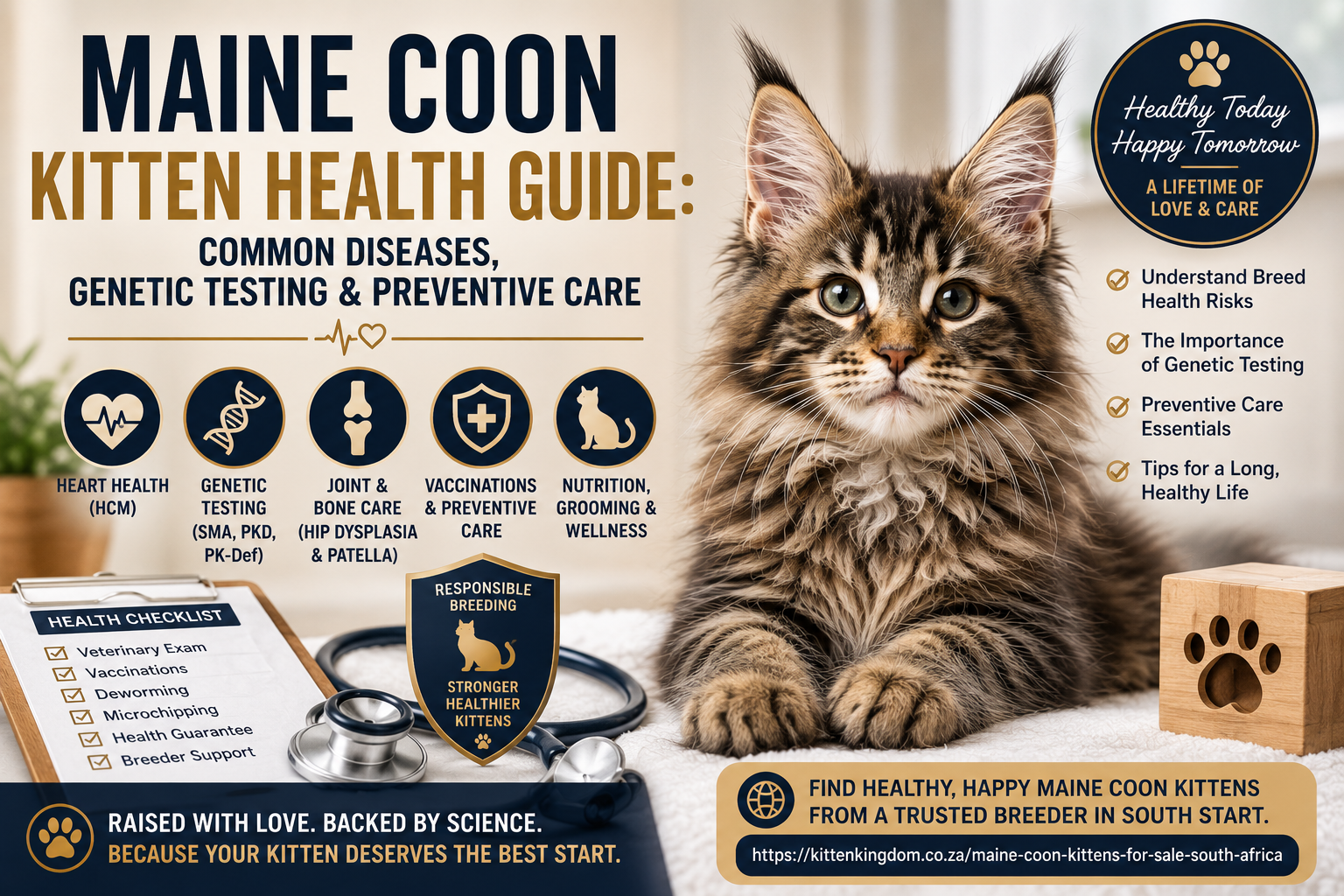
Maine Coon kittens are renowned for their impressive size, gentle personalities, intelligence and distinctive long coats. Although the breed is generally considered robust, responsible Maine Coon ownership requires an understanding of breed-associated health conditions, genetic screening and preventive veterinary care.
If you are considering purchasing Maine Coon kittens for sale in South Africa, health should be one of the most important factors in your decision—not simply appearance, size or coat colour.
Maine Coons mature slowly and can continue developing for several years. The International Cat Association (TICA) notes that they may not reach full maturity until around four years of age, while also identifying hypertrophic cardiomyopathy (HCM), hip dysplasia, luxating patella and certain inherited disorders as important health considerations for the breed.
This comprehensive guide covers the most important Maine Coon kitten health topics, including common diseases, genetic testing, veterinary examinations, nutrition, grooming and preventive care.
Are Maine Coon Kittens Generally Healthy?
Maine Coons are often described as a hardy natural breed. However, being a generally robust breed does not mean that every Maine Coon is free from inherited or acquired health problems.
Good health begins before a kitten is born.
A responsible breeding program should focus on:
- Selecting healthy breeding cats
- Appropriate genetic screening
- Cardiac screening
- Orthopedic evaluation where appropriate
- Good nutrition
- Clean and safe housing
- Proper kitten socialisation
- Veterinary examinations
- Vaccination
- Parasite prevention
- Transparent health records
TICA specifically recommends that responsible Maine Coon breeders use both genetic testing and periodic echocardiographic evaluation when screening breeding cats for HCM.
For prospective South African owners researching Maine Coon kittens for sale in South Africa, asking about these health practices before purchasing is an important part of responsible pet ownership.
Common Maine Coon Health Problems
Several conditions deserve particular attention when buying or raising a Maine Coon.
1. Hypertrophic Cardiomyopathy (HCM)
HCM is one of the most important health concerns associated with Maine Coon cats.
The condition involves abnormal thickening of the heart muscle, which can interfere with normal cardiac function.
Importantly, HCM genetic testing and cardiac screening are not the same thing.
A DNA test looks for particular known genetic variants associated with disease risk. An echocardiogram evaluates the actual structure and function of the heart.
TICA recommends using both approaches because genetic testing alone cannot identify every possible mutation associated with HCM.
What should buyers ask breeders about HCM?
Ask:
- Has the kitten's parentage been genetically screened?
- Which HCM mutation was tested?
- Can you see the test results?
- Have breeding cats undergone echocardiograms?
- How frequently are breeding cats screened?
- Which veterinarian or veterinary cardiologist performed the evaluation?
The Cat Fanciers' Association also identifies HCM testing through genetic testing and echocardiography as an important tool in maintaining healthy Maine Coon breeding lines.
2. Spinal Muscular Atrophy (SMA)
Spinal Muscular Atrophy is an inherited neurological condition that can occur in Maine Coon cats.
It affects motor neurons and can cause progressive muscle weakness and mobility problems.
The good news is that DNA screening can help breeders identify cats carrying relevant mutations and make informed breeding decisions.
The Cat Fanciers' Association identifies SMA as one of the hereditary health conditions for which genetic testing can be useful in pedigreed cats and specifically identifies SMA mutations as a concern in Maine Coons.
This is one reason buyers should ask whether breeding cats have been DNA screened rather than simply asking whether the kitten "looks healthy."
3. Hip Dysplasia
Maine Coons are large cats, and their substantial skeletal structure makes orthopedic health an important consideration.
Hip dysplasia involves abnormal development of the hip joint and can contribute to pain, stiffness and arthritis.
TICA notes that many breeders screen Maine Coon breeding cats for feline hip dysplasia using X-rays.
Preventive measures include:
- Maintaining a healthy body weight
- Providing appropriate nutrition
- Avoiding excessive weight gain during growth
- Encouraging controlled exercise
- Providing sturdy climbing structures
- Obtaining veterinary advice when mobility changes occur
A kitten should not be intentionally overfed in an attempt to make it grow larger faster.
4. Luxating Patella
A luxating patella occurs when the kneecap moves out of its normal position.
Mild cases may cause few obvious symptoms, while more significant cases can affect movement and comfort.
TICA identifies luxating patella as another orthopedic condition that some Maine Coon breeders screen for.
Ask a breeder whether the parents have undergone appropriate orthopedic assessment, particularly if you are purchasing a kitten intended for breeding.
5. Polycystic Kidney Disease (PKD)
Polycystic Kidney Disease involves the development of cysts in the kidneys.
Genetic screening is available for PKD-related mutations in cats, and genetic testing has become an increasingly valuable tool for responsible pedigree breeding. The CFA identifies PKD among the hereditary conditions for which feline genetic testing is available.
Buyers should ask breeders exactly which PKD test was performed and request documentation where applicable.
It is important not to assume that a DNA result automatically means a cat can never develop any kidney disease. Genetic tests address specific known mutations, while veterinary monitoring remains important throughout a cat's life.
Maine Coon Genetic Testing: What Buyers Need to Know
Genetic testing has become an important component of modern pedigree-cat breeding.
According to CFA, genetic tests can identify mutations associated with hereditary diseases and can help breeders make more informed mating decisions.
TICA similarly explains that genetic screening can provide information about disease mutations, carriers and genetic status, helping breeders reduce the likelihood of producing kittens with particular inherited conditions.
Common genetic tests you may encounter include:
ConditionTesting/ScreeningWhy It MattersHCMDNA + cardiac evaluationHelps assess inherited and clinical heart riskSMADNA testingIdentifies relevant inherited mutation statusPKDDNA testing where applicableHelps identify specific hereditary riskPK-DefDNA testingScreens for pyruvate kinase deficiencyHip dysplasiaX-ray evaluationAssesses orthopedic healthLuxating patellaPhysical/X-ray assessmentEvaluates kneecap stability
The exact screening program can vary between breeders, bloodlines and testing laboratories.
DNA Testing Does Not Replace Veterinary Care
One of the most important points for prospective Maine Coon owners is that a genetic-clear result does not mean a cat can never become ill.
Genetic tests generally target particular known variants. They cannot predict every possible disease or environmental health problem.
For example, TICA specifically explains that genetic testing alone is insufficient for HCM screening because not all mutations associated with the condition have been identified.
Therefore, the strongest health approach combines:
Genetic testing + veterinary examinations + appropriate cardiac screening + responsible breeding + preventive care.
What Health Testing Should a Maine Coon Breeder Provide?
If you are researching Maine Coon kittens for sale in South Africa, ask the breeder for clear information about the health of the parents.
A useful breeder health checklist includes:
HCM screening
Ask whether the parents have received genetic and echocardiographic screening.
SMA testing
Ask whether breeding cats have been DNA screened for SMA.
PKD testing
Ask whether the relevant PKD genetic testing has been completed where appropriate.
PK-Def testing
Ask whether the breeding lines have been screened for pyruvate kinase deficiency.
Orthopedic screening
Ask whether hip dysplasia or luxating patella assessments have been performed.
Veterinary examinations
Ask for records showing that the kitten itself has been examined by a veterinarian.
Kitten Kingdom SA states that its breeding lines are DNA screened for HCM, PKD, SMA and PK-Def and that kittens undergo veterinary health checks covering areas including the heart, lungs, eyes, ears, joints, bite alignment and development.
Maine Coon Kitten Vaccinations
Vaccination is an essential part of preventive healthcare.
Kitten Kingdom SA states that its kittens receive two rounds of core 3-in-1 vaccinations at approximately eight and twelve weeks, with veterinary documentation provided.
When collecting a kitten, ask for:
- Vaccination dates
- Vaccine names
- Veterinary details
- Deworming records
- Microchip information
- Recommended next vaccination date
Your veterinarian can then establish an appropriate vaccination schedule based on your kitten's age, history, lifestyle and local veterinary recommendations.
Veterinary Examination After Bringing Your Kitten Home
Even when a breeder provides veterinary documentation, establishing a relationship with your own veterinarian is important.
A new kitten examination can help assess:
- Heart
- Lungs
- Eyes
- Ears
- Teeth
- Gums
- Weight
- Body condition
- Joints
- Skin
- Coat
- Parasite status
- General development
Kitten Kingdom SA's health guarantee requires buyers to have the kitten examined by a licensed veterinarian within 72 hours of arrival under its stated terms.
Always follow the specific requirements of your purchase agreement and your veterinarian's recommendations.
Maine Coon Nutrition and Healthy Growth
Nutrition plays a major role in kitten development.
Maine Coon kittens grow for considerably longer than many other cats. TICA notes that Maine Coons can take several years to reach full maturity.
This means owners should focus on steady, healthy development rather than maximum size.
Good nutritional practices include:
- Feed a complete and balanced kitten diet.
- Follow appropriate portion guidance.
- Monitor body condition.
- Provide fresh water.
- Avoid excessive treats.
- Discuss dietary changes with your veterinarian.
- Transition between foods gradually.
Overfeeding can contribute to excessive body weight, which can place additional stress on joints and negatively affect long-term health.
Maintaining a Healthy Maine Coon Weight
Because Maine Coons are naturally large, owners sometimes mistake excess body fat for healthy breed size.
This can be dangerous.
A healthy Maine Coon should be evaluated according to body condition rather than simply the number on a scale.
Ask your veterinarian to show you how to assess:
- Rib coverage
- Waist definition
- Abdominal shape
- Muscle condition
- Overall body composition
Maintaining an appropriate weight is particularly important for a large breed with potential orthopedic concerns.
Grooming as Preventive Care
Maine Coon grooming is not only about appearance.
Their semi-long coats can develop tangles and mats, particularly around:
- The belly
- Armpits
- Behind the ears
- Legs
- Tail
TICA recommends regular combing and notes that grooming requirements can vary depending on coat texture.
Start grooming while your kitten is young.
A gentle grooming routine can include:
- Regular combing
- Nail trimming
- Ear checks
- Dental care
- Skin inspection
TICA recommends regular teeth brushing and more frequent nail trimming during kittenhood.
Dental Health for Maine Coon Cats
Dental disease is not unique to Maine Coons, but oral health should form part of every cat's preventive-care routine.
Regular veterinary dental examinations can help identify:
- Plaque
- Tartar
- Gingivitis
- Tooth damage
- Oral inflammation
- Periodontal disease
Where possible, introduce tooth brushing gradually while your cat is young.
Never use human toothpaste unless specifically advised by your veterinarian.
Parasite Prevention
Indoor cats can still be exposed to parasites.
Depending on your location and lifestyle, your veterinarian may recommend prevention for:
- Intestinal worms
- Fleas
- Ticks
- Other relevant parasites
Do not administer medication designed for dogs unless your veterinarian specifically confirms that it is safe for your cat.
Some products intended for dogs can be dangerous or even fatal to cats.
Exercise and Joint Health
Maine Coon kittens are playful and active.
Regular play supports:
- Muscle development
- Coordination
- Mental stimulation
- Healthy body weight
- Natural hunting behaviours
Because Maine Coons become large adults, choose sturdy climbing structures that can safely support their eventual weight.
Interactive toys such as wand toys, puzzle feeders and supervised fetch games can provide valuable physical and mental enrichment.
Signs of Illness You Should Never Ignore
Cats can be exceptionally good at hiding illness.
Contact your veterinarian if your Maine Coon kitten develops symptoms such as:
- Difficulty breathing
- Persistent coughing
- Sudden weakness
- Collapse
- Severe lethargy
- Loss of appetite
- Persistent vomiting
- Persistent diarrhoea
- Difficulty urinating
- Sudden mobility problems
- Significant weight loss
- Abdominal swelling
- Pale or abnormal gums
- Sudden behavioural changes
Breathing difficulty, collapse or sudden severe weakness should be treated as an emergency.
Never attempt to diagnose a serious condition solely from an online article.
Maine Coon Heart Health: Why Regular Monitoring Matters
HCM deserves special attention because a cat may appear perfectly healthy while an underlying cardiac problem is developing.
That is why responsible breeding programs use screening rather than relying solely on appearance.
TICA recommends periodic echocardiograms performed by appropriately qualified veterinary professionals in addition to genetic testing for Maine Coon breeding cats.
For owners, routine veterinary examinations can help establish whether additional cardiac assessment is appropriate based on age, family history, physical findings or other risk factors.
Preventive Care Schedule for Maine Coon Kittens
A simple preventive-care framework can help new owners stay organised.
At acquisition
Confirm:
- Veterinary records
- Vaccinations
- Deworming
- Microchip
- Health guarantee
- Genetic information about parents
- Feeding instructions
Shortly after arrival
Arrange a veterinary examination according to your breeder's contract and your veterinarian's advice.
Throughout kittenhood
Monitor:
- Weight
- Growth
- Appetite
- Stool
- Coat
- Activity
- Behaviour
- Dental development
- Vaccination status
Adult life
Continue:
- Routine veterinary examinations
- Vaccination according to veterinary guidance
- Parasite prevention
- Dental care
- Grooming
- Weight management
- Exercise
- Environmental enrichment
How to Choose a Health-Conscious Maine Coon Breeder
When looking for Maine Coon kittens for sale in South Africa, do not choose a breeder based solely on attractive photographs or the advertised kitten price.
Look for evidence of:
Transparency
The breeder should be willing to explain its health practices.
Health documentation
Ask for actual records where appropriate.
Parent screening
Find out what tests were performed on the sire and dam.
Veterinary involvement
Confirm that kittens receive professional veterinary care.
Socialisation
Ask how kittens are raised and exposed to people and normal household environments.
Written agreements
Review health guarantees and buyer responsibilities before paying.
Ongoing support
A responsible breeder should be prepared to answer reasonable questions after the kitten goes home.
Questions to Ask Before Buying a Maine Coon Kitten
Before placing a deposit, ask:
- What health tests have been performed on the parents?
- Have the parents been screened for HCM?
- Have the breeding cats undergone echocardiograms?
- Are SMA and other relevant genetic tests available?
- What veterinary examinations has the kitten received?
- Which vaccines has the kitten received?
- Has the kitten been dewormed?
- Is the kitten microchipped?
- What health guarantee is provided?
- What does the contract require from the buyer?
- What food is the kitten currently eating?
- How has the kitten been socialised?
- What happens if the kitten develops a serious inherited condition?
- What breeder support is available after adoption?
A reputable breeder should be comfortable discussing these questions.
Maine Coon Health Guide for South African Owners
South African owners should consider their cat's environment when developing a preventive-care routine.
Maine Coons can live successfully indoors, provided they receive adequate enrichment, exercise and appropriate environmental resources.
A healthy indoor environment should provide:
- Fresh drinking water
- Safe resting areas
- Scratching posts
- Climbing structures
- Interactive toys
- Clean litter facilities
- Appropriate temperature control
- Safe windows and balconies
- Regular human interaction
If you are purchasing Maine Coon kittens for sale in South Africa, discuss your home's environment and lifestyle with the breeder so you can prepare appropriately before the kitten arrives.
Health Guarantees: What Buyers Should Check
A written health guarantee can provide additional protection, but buyers should carefully read the actual terms.
Kitten Kingdom SA states that its health guarantee includes 14-day viral coverage and two-year coverage for specified congenital or genetic defects affecting life expectancy, subject to its stated conditions and buyer responsibilities.
When reviewing any breeder's guarantee, check:
- What conditions are covered?
- How long does coverage last?
- What documentation is required?
- Does the kitten need an examination within a specified period?
- Are routine veterinary requirements imposed?
- What happens if a covered condition is diagnosed?
- Are there exclusions?
- Does the agreement require sterilisation?
A health guarantee should complement—not replace—responsible veterinary care.
Why Preventive Care Is Better Than Waiting for Symptoms
Preventive care can identify potential problems before they become emergencies.
Regular veterinary care allows professionals to monitor:
- Growth
- Weight
- Heart health
- Dental development
- Joint health
- Parasite exposure
- Vaccination status
- General behaviour
This is particularly valuable for Maine Coons because some breed-associated conditions may not be obvious during everyday observation.
Maine Coon Kitten Health Checklist
Use this checklist when buying or raising a Maine Coon kitten:
- Research the breed's health risks
- Verify the breeder's health-testing program
- Ask about HCM screening
- Ask about echocardiograms
- Ask about SMA testing
- Ask about PKD testing
- Ask about PK-Def testing
- Ask about hip screening
- Obtain veterinary records
- Confirm vaccinations
- Confirm deworming
- Confirm microchip details
- Review the written health guarantee
- Arrange veterinary care after arrival
- Maintain an appropriate kitten diet
- Monitor weight and growth
- Establish regular grooming
- Introduce dental care early
- Provide daily exercise and enrichment
- Learn the warning signs of illness
Frequently Asked Questions About Maine Coon Kitten Health
Are Maine Coon kittens prone to health problems?
Maine Coons are generally considered a hardy breed, but they have recognised breed-associated risks including HCM, hip dysplasia, luxating patella and certain inherited conditions.
What is the most important Maine Coon genetic test?
HCM testing is particularly important, but a comprehensive breeding program may also screen for conditions such as SMA, PKD and PK-Def. The appropriate testing depends on the individual bloodline and available validated tests.
Is an HCM DNA test enough?
No. TICA recommends combining genetic testing with echocardiographic screening because genetic testing does not detect every possible mutation associated with HCM.
How can I find a healthy Maine Coon kitten in South Africa?
Look for breeders who provide transparent health information, veterinary records, appropriate genetic screening, socialisation and written health guarantees. You can begin your research by reviewing Maine Coon kittens for sale in South Africa.
Do Maine Coon kittens need regular veterinary visits?
Yes. Routine veterinary care is important for monitoring growth, vaccinations, parasites, dental health, weight and overall development.
Can nutrition prevent genetic diseases?
No. A healthy diet cannot eliminate an inherited genetic mutation. However, appropriate nutrition can support healthy growth, body condition and overall wellbeing.
How often should a Maine Coon be groomed?
Regular grooming is recommended. TICA notes that some coats may need more frequent attention than others and recommends establishing grooming habits from kittenhood.
Final Thoughts: Protecting Your Maine Coon's Long-Term Health
A healthy Maine Coon starts with responsible breeding, but lifelong health depends on what happens after the kitten joins your family.
The most important priorities are:
Responsible breeding → genetic screening → veterinary care → appropriate nutrition → preventive medicine → healthy weight → grooming → exercise → regular monitoring.
If you are currently researching Maine Coon kittens for sale in South Africa, make health documentation one of your first priorities.
Do not hesitate to ask breeders detailed questions about HCM, SMA, PKD, PK-Def, orthopedic screening, veterinary examinations and health guarantees. Responsible breeders should understand why these questions matter.
Kitten Kingdom SA states that its Maine Coon breeding cats undergo genetic screening and that its kittens receive veterinary checks, core vaccinations and microchipping, with a written health guarantee provided under its stated terms.
Ultimately, the goal is not simply to find a beautiful Maine Coon kitten. It is to find a kitten that has been responsibly bred, properly cared for, appropriately screened and given the best possible start in life.
For prospective owners, you can explore Maine Coon kittens for sale in South Africa and use the health questions in this guide when evaluating your options.
Always consult a qualified veterinarian for diagnosis, treatment and an individual preventive-care plan for your cat.