
Understanding HCM in Cats: Symptoms, Screening and Prevention
Published on November 06, 2026 • Written by Kitten Kingdom Expert • 10 min read
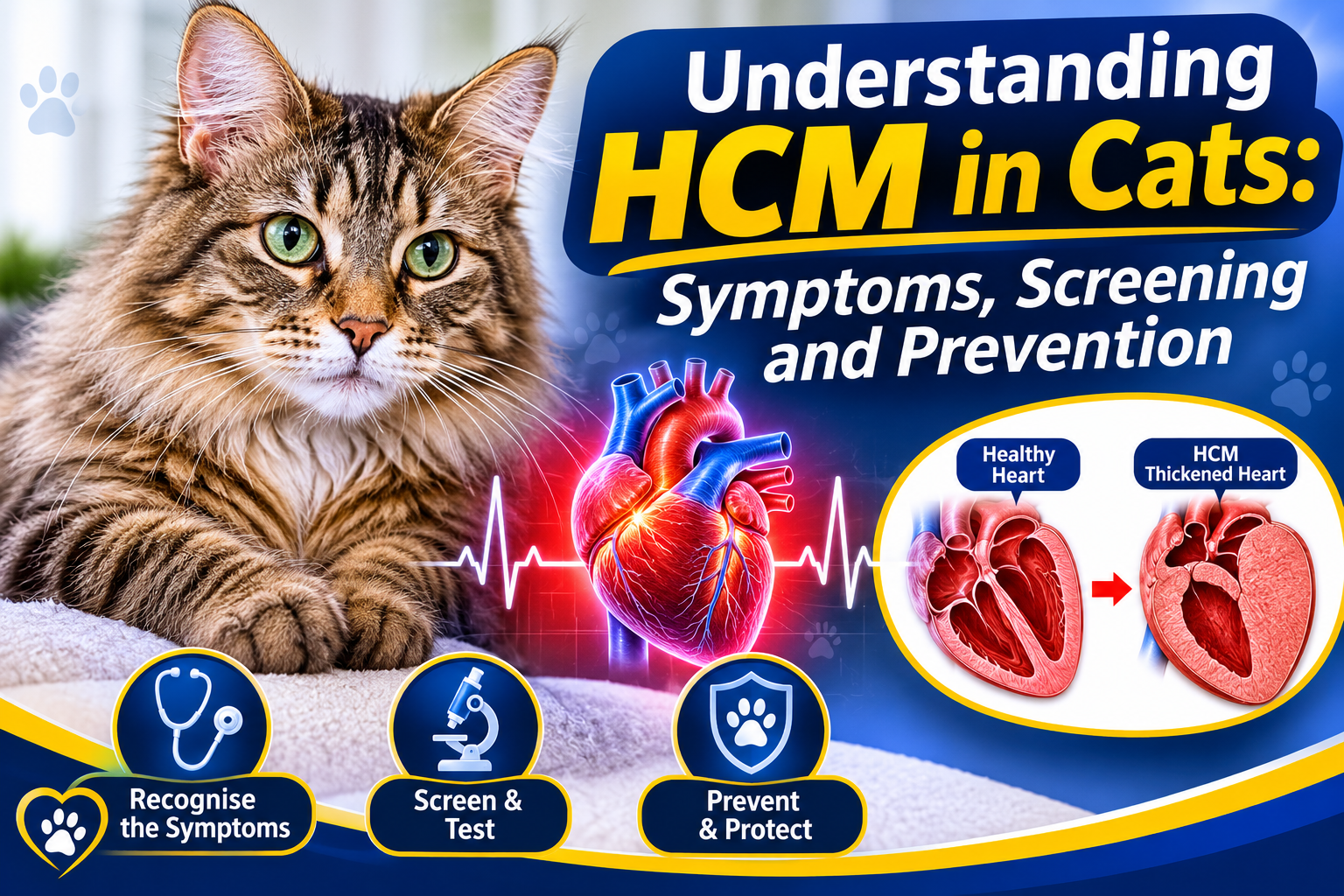
A cat's heart plays an essential role in maintaining its overall health, supporting circulation and delivering oxygen throughout the body. Unfortunately, cats can develop several heart conditions that may affect their quality of life, and one of the most important conditions cat owners and breeders should understand is Hypertrophic Cardiomyopathy (HCM).
HCM is one of the most commonly diagnosed heart diseases in domestic cats. It occurs when the muscular walls of the heart, particularly the left ventricle, become abnormally thick. This thickening can make it harder for the heart to relax and fill with blood between contractions. As the condition progresses, it may interfere with normal blood circulation and potentially lead to serious complications.
One of the biggest challenges associated with HCM is that affected cats may appear completely healthy for years. Some cats show no obvious symptoms until the disease has progressed or a serious complication develops. This makes awareness, responsible breeding, veterinary examinations and appropriate heart screening particularly important.
Certain pedigree breeds, including Maine Coons and Ragdolls, have recognised inherited forms of HCM. However, the condition is not restricted to pedigree cats. Domestic short-haired and long-haired cats can also develop the disease.
For anyone considering purchasing a pedigree kitten, understanding inherited heart conditions is an important part of responsible pet ownership. Learning about the health background of a kitten's parents, asking breeders about relevant health screening and maintaining regular veterinary care can help owners make more informed decisions.
At Kitten Kingdom, we believe that choosing a kitten should involve more than appearance, colour or pedigree. Health, responsible breeding practices and long-term welfare should always be part of the decision.
This comprehensive guide explains what HCM is, which cats may be at risk, the symptoms to watch for, available screening methods, genetic testing, treatment options and what owners can do to support their cats' heart health.
1. What Is Hypertrophic Cardiomyopathy (HCM) in Cats?
Hypertrophic Cardiomyopathy is a heart muscle disease characterised by abnormal thickening of the heart's muscular walls.
The left ventricle is the main chamber responsible for pumping oxygen-rich blood around the body. In a healthy cat, this chamber must relax sufficiently to fill with blood before pumping it into circulation.
In a cat affected by HCM, the thickened heart muscle can become stiff and less flexible. This reduces the amount of blood the heart can comfortably receive during its relaxation phase.
As a result, the heart may need to work harder to maintain normal circulation.
In some cats, the condition remains relatively stable for years. In others, it progresses and causes complications such as congestive heart failure, blood clots or dangerous heart rhythm disturbances.
How Does HCM Affect the Heart?
The disease can produce several structural and functional changes, including:
- Thickening of the left ventricular wall.
- Reduced flexibility of the heart muscle.
- Impaired filling of the left ventricle.
- Enlargement of the left atrium in some affected cats.
- Increased pressure within the heart and blood vessels.
- Abnormal blood flow through the heart.
- Increased risk of blood clot formation in certain cats.
One complication is called left ventricular outflow tract obstruction (LVOTO). In some cats, abnormal movement of the mitral valve during heart contraction interferes with blood leaving the left ventricle.
This can create turbulent blood flow and an audible heart murmur.
However, not every cat with HCM develops LVOTO, and not every cat with a heart murmur has HCM.
Is HCM Common in Cats?
HCM is widely recognised as the most common form of primary heart disease in domestic cats.
It can affect cats of different ages, sexes and breeds. Some cats develop the disease because of inherited genetic factors, while others may develop heart muscle thickening secondary to another medical condition.
This distinction is important because not every thickened heart is necessarily affected by primary HCM.
For example, high blood pressure and hyperthyroidism can sometimes cause changes in the thickness of the heart muscle. A veterinarian must investigate these possibilities before reaching a diagnosis.
2. Which Cat Breeds Are More at Risk of HCM?
Although HCM can affect any cat, certain pedigree breeds have documented inherited predispositions.
This is particularly relevant to prospective owners purchasing pedigree kittens because responsible breeders should understand the known health risks associated with their breeding lines.
Maine Coon Cats
Maine Coons are among the breeds most closely associated with inherited HCM.
A recognised genetic variant involving the MYBPC3 gene has been identified in this breed. This gene is responsible for producing a protein that plays an important role in normal heart muscle function.
The identified variant is associated with an increased risk of developing HCM.
However, possessing one or two copies of the variant does not mean that every affected cat will develop clinical heart disease. Similarly, a negative result for this particular variant does not eliminate all possible genetic or other causes of HCM.
Anyone interested in this impressive breed can explore our Maine Coon kittens for sale in South Africa page and learn more about selecting a healthy kitten.
Ragdoll Cats
Ragdolls also have a recognised inherited form of HCM associated with a different MYBPC3 genetic variant.
The variant is distinct from the one identified in Maine Coons.
Genetic testing can identify cats carrying the known Ragdoll-associated variant. However, genetic results must be interpreted carefully because they cannot predict with complete certainty whether an individual cat will develop clinically significant disease.
When purchasing a Ragdoll kitten, ask about the parents' genetic testing and, importantly, whether they have undergone appropriate cardiac examinations.
You can explore our Ragdoll kittens available in South Africa page to learn more about this popular breed.
British Shorthair Cats
British Shorthairs are another pedigree breed whose heart health deserves attention.
HCM has been reported in British Shorthairs, although the genetic causes are not as clearly established as the known variants in Maine Coons and Ragdolls.
A negative Maine Coon or Ragdoll genetic test does not establish that a British Shorthair is free from HCM.
For prospective owners, responsible breeding, veterinary examinations and appropriate cardiac screening remain important.
Discover more about the breed through our British Shorthair kittens for sale in South Africa page.
Persian Cats
Persian cats can also develop HCM, as can other pedigree and non-pedigree cats.
Although the condition is not exclusive to Persians, buyers should still ask about the health history of the kitten's parents and whether there is a history of diagnosed heart disease in the breeding line.
If you are considering this breed, visit our Persian kittens for sale in South Africa page.
Other Cat Breeds
HCM has also been reported in several other breeds, including:
- Bengal cats.
- Sphynx cats.
- Siberian cats.
- Norwegian Forest Cats.
- Domestic short-haired cats.
- Domestic long-haired cats.
The presence of HCM in these populations does not mean every individual is at high risk. Each cat's health history, genetics and clinical findings should be considered independently.
3. What Causes HCM in Cats?
HCM does not have one universal cause. It can develop through inherited genetic abnormalities or occur without an identified inherited mutation.
Understanding the possible causes helps breeders and owners make more informed decisions.
Genetic Inheritance
In certain breeds, HCM is associated with inherited mutations affecting proteins involved in heart muscle contraction.
The best-known examples involve the MYBPC3 gene in Maine Coons and Ragdolls.
These recognised variants follow an autosomal dominant inheritance pattern. This means a cat may inherit the variant from either parent.
However, inheritance and disease development are not identical.
A cat carrying a known mutation may never develop clinically apparent HCM, while a cat without that mutation may still develop the disease for another genetic or unexplained reason.
This is why genetic testing should not replace echocardiographic screening.
Unknown Genetic Factors
Not all cats with HCM have an identifiable mutation.
Researchers continue to investigate the genetic and biological factors contributing to feline heart disease.
A negative genetic test therefore cannot be interpreted as a guarantee that a cat will never develop HCM.
Secondary Heart Muscle Thickening
Some medical conditions can produce changes in the heart that resemble HCM.
These include:
- Systemic hypertension, commonly known as high blood pressure.
- Hyperthyroidism, particularly in older cats.
- Certain other medical conditions that affect heart structure.
Veterinarians may need to investigate these conditions when evaluating a cat with thickened heart walls.
Age and Disease Development
HCM can be diagnosed in cats of different ages.
Some inherited cases become apparent relatively early in life, while other cats develop detectable changes later.
A normal examination during kittenhood does not necessarily mean the cat will remain free from HCM throughout adulthood.
This is particularly important for breeders who plan to use cats in future breeding programmes.
4. Early Symptoms of HCM in Cats
One of the most concerning characteristics of HCM is that affected cats may not show obvious symptoms during the early stages.
Some cats continue eating, playing and behaving normally despite having significant abnormalities within their hearts.
Others develop symptoms as the disease progresses.
Recognising possible warning signs is essential.
Increased or Rapid Breathing
A change in breathing pattern can be an important warning sign.
Cats experiencing congestive heart failure may develop fluid accumulation in or around the lungs, making normal breathing difficult.
Signs may include:
- Rapid breathing while resting.
- Increased movement of the chest or abdomen.
- Noticeable effort when breathing.
- Difficulty settling comfortably.
- Open-mouth breathing.
A consistently elevated resting respiratory rate deserves veterinary investigation.
Owners can monitor their cat's breathing while it is asleep or completely relaxed. One complete rise and fall of the chest counts as one breath.
Many healthy cats breathe fewer than 30 times per minute while sleeping, although individual circumstances vary.
Repeated readings above this level should be discussed with a veterinarian, particularly when accompanied by other symptoms.
Emergency warning: Open-mouth breathing, severe breathing difficulty or obvious respiratory distress requires immediate veterinary attention.
Reduced Activity and Exercise Intolerance
A cat with developing heart disease may become less active.
Owners might notice that their previously playful kitten or adult cat:
- Stops playing as frequently.
- Tires quickly.
- Sleeps more than usual.
- Avoids jumping onto furniture.
- Becomes less interested in physical activity.
These changes are not specific to HCM, but unexplained changes in activity should not be ignored.
Lethargy and Weakness
As heart function becomes impaired, some cats may develop general weakness.
They may appear unusually tired, spend more time resting or become less interested in their normal activities.
Lethargy can have many causes, so a veterinary examination is necessary to identify the underlying problem.
Reduced Appetite
Cats experiencing advanced heart disease may lose interest in food.
This can occur because of general illness, breathing difficulties or other complications associated with heart failure.
Persistent appetite changes should always be investigated.
Fainting or Collapse
Some cats with HCM experience fainting episodes, also known as syncope.
This can occur when the heart is unable to maintain adequate blood circulation to the brain.
Possible warning signs include:
- Sudden collapse.
- Brief loss of consciousness.
- Unexpected weakness.
- Episodes of falling over.
- Sudden inability to stand normally.
Collapse is an emergency and requires immediate veterinary assessment.
Blood Clots and Sudden Hind-Leg Paralysis
One of the most serious complications of HCM is arterial thromboembolism, commonly called a saddle thrombus.
Blood clots can develop within the heart, particularly in cats with significant enlargement of the left atrium and sluggish blood flow.
A clot may travel into the major artery supplying the hind legs and obstruct circulation.
Possible symptoms include:
- Sudden severe pain.
- Sudden inability to use one or both hind legs.
- Dragging the back legs.
- Cold hind paws.
- Pale or bluish paw pads.
- Crying or extreme distress.
This is a life-threatening emergency. Immediate veterinary treatment is essential.
5. Can Cats Have HCM Without Showing Symptoms?
Yes. In fact, some cats with HCM appear perfectly healthy.
This is one of the reasons why routine veterinary examinations are so important.
An apparently healthy cat may have structural abnormalities that are not obvious during an ordinary physical examination.
Some affected cats have a heart murmur, but others have completely normal-sounding heartbeats.
Therefore:
- A cat without a murmur can still have HCM.
- A cat with a murmur does not automatically have HCM.
- A normal physical examination cannot completely rule out the condition.
- Genetic testing alone cannot exclude every possible form of HCM.
An echocardiogram is the preferred diagnostic examination for assessing the structure and function of the heart.
For pedigree cat owners and breeders, this distinction is especially important. A kitten should not be considered free from future heart disease simply because it looks healthy.
6. How Is HCM Diagnosed in Cats?
Diagnosing HCM requires veterinary assessment and, where indicated, specialised cardiac investigations.
A veterinarian may recommend several examinations depending on the cat's age, symptoms, breed and medical history.
Physical Examination
The initial examination may include:
- Listening to the heart using a stethoscope.
- Checking the heart rate and rhythm.
- Assessing breathing rate and effort.
- Checking the cat's general physical condition.
- Reviewing previous medical records.
- Asking about family history of heart disease.
The veterinarian may detect an abnormal heart sound, but a normal examination does not exclude HCM.
Echocardiography
An echocardiogram is considered the most useful examination for diagnosing feline HCM.
It uses ultrasound waves to produce images of the heart while it is functioning.
A veterinary cardiologist or appropriately trained veterinarian can assess:
- Thickness of the left ventricular walls.
- Size of the heart chambers.
- Left atrial enlargement.
- Movement of the mitral valve.
- Blood flow through the heart.
- Overall cardiac function.
An echocardiogram can help distinguish primary HCM from other causes of heart muscle thickening.
It is particularly valuable for pedigree breeding programmes because it evaluates the actual structure of the heart rather than simply looking for one known genetic mutation.
Genetic Testing
Genetic testing is available for recognised HCM-associated mutations in certain breeds.
For example:
- Maine Coon testing can identify the recognised MYBPC3-associated variant.
- Ragdoll testing can identify its separate recognised MYBPC3-associated variant.
These tests are useful when evaluating breeding cats and understanding inherited risk.
However, they have limitations.
A negative result does not exclude all possible forms of HCM, and a positive result does not establish the severity of future disease.
Genetic testing should therefore be combined with appropriate cardiac evaluation and a complete family health history.
Blood Tests
Blood tests may help identify other conditions that can affect the heart.
Depending on the cat's age and symptoms, a veterinarian may recommend:
- Thyroid hormone testing.
- Kidney function testing.
- Electrolyte assessment.
- General blood chemistry.
- Complete blood count.
These tests help investigate possible underlying medical conditions.
NT-proBNP Testing
NT-proBNP is a biomarker associated with stress on the heart muscle.
A blood test can help identify cats that may have clinically relevant cardiac abnormalities.
It can be useful as an additional screening tool, particularly when an echocardiogram is not immediately available.
However, NT-proBNP testing is not a substitute for echocardiography and cannot definitively rule out HCM in every cat.
7. HCM Screening for Pedigree Cats and Breeding Programmes
Heart screening should be an important part of responsible pedigree cat breeding.
Breeders who understand inherited health conditions can make more informed decisions when selecting breeding animals.
This helps reduce the risk of knowingly passing recognised inherited mutations to future generations.
Why Should Breeding Cats Be Screened?
A breeding cat may look healthy and show no obvious signs of heart disease while still carrying an inherited mutation or having early cardiac changes.
Screening helps breeders identify potential risks before making breeding decisions.
A responsible breeding programme should consider:
- The cat's family history.
- Relevant breed-specific genetic testing.
- Veterinary cardiac examinations.
- Previous echocardiogram results.
- The health history of previous offspring.
- Any history of unexplained sudden deaths or diagnosed heart disease in related cats.
How Often Should Breeding Cats Be Screened?
There is no single screening interval that is appropriate for every breed and individual cat.
The timing of repeat examinations should be determined with a veterinary cardiologist, taking into account:
- The cat's age.
- Breed-specific risks.
- Previous cardiac findings.
- Genetic test results.
- Family history.
- Whether the cat is actively being used for breeding.
Because HCM can develop later in life, one normal echocardiogram at a young age should not automatically be treated as lifelong clearance.
Breeders should establish an ongoing screening programme rather than relying on a single examination.
What Should Kitten Buyers Ask Breeders?
Before purchasing a pedigree kitten, prospective owners should ask the breeder several important questions:
- Have the kitten's parents undergone echocardiographic screening?
- Were breed-specific HCM genetic tests performed where applicable?
- Can the breeder provide copies of relevant test results?
- Is there any known history of HCM in the breeding line?
- Does the breeder have a regular veterinary health programme?
- What happens if an inherited health condition is identified?
- Are the parents' health records available for review?
A responsible breeder should be willing to discuss health screening openly.
For more guidance, read our guide to choosing a reputable pedigree kitten breeder.
8. Can HCM in Cats Be Prevented?
There is currently no guaranteed way to prevent every case of HCM.
However, responsible breeding and appropriate veterinary screening can help reduce inherited risk and identify affected cats earlier.
Prevention should be approached from two perspectives: reducing inherited risk and supporting the overall health of individual cats.
Responsible Breeding Practices
For breeds with recognised inherited HCM mutations, genetic testing can help breeders make informed breeding decisions.
In particular, breeders should avoid deliberately producing kittens from combinations that increase the risk of inheriting recognised disease-associated variants.
However, breeding decisions should not rely on genetic testing alone.
Echocardiographic screening remains important because not all HCM cases are explained by the known mutations.
A comprehensive breeding strategy should consider both genetic and clinical evidence.
Regular Veterinary Check-Ups
Routine veterinary examinations allow changes in a cat's health to be investigated.
Even when a cat appears healthy, periodic examinations are useful for identifying abnormal heart sounds, elevated blood pressure and other potential health concerns.
Older cats may benefit from more frequent health assessments depending on their individual circumstances.
Maintain a Healthy Body Weight
Obesity does not directly cause inherited HCM, but maintaining a healthy body weight supports overall cardiovascular and general health.
Excess weight can contribute to other medical problems and make existing health conditions more difficult to manage.
Provide appropriate portions, encourage regular activity and discuss dietary needs with your veterinarian.
Feed a Complete and Balanced Diet
Cats require a nutritionally complete diet formulated for their life stage.
A balanced diet helps support normal growth, muscle development and general health.
Avoid unnecessary supplementation unless recommended by a veterinarian.
There is no specific commercial food or supplement proven to prevent inherited HCM.
Monitor Breathing and Behaviour
Owners should become familiar with their cat's normal breathing pattern and daily behaviour.
Changes worth investigating include:
- Increased resting respiratory rate.
- Reduced activity.
- Unexpected weight changes.
- Reduced appetite.
- Difficulty breathing.
- Unexplained weakness.
Early veterinary assessment may help identify complications before they become more serious.
9. Treatment Options for Cats Diagnosed With HCM
There is currently no treatment that completely reverses inherited HCM.
However, treatment can help manage symptoms, address complications and improve quality of life.
The treatment plan depends on the severity of the disease and whether the cat has developed complications.
Monitoring Mild or Subclinical HCM
Some cats have detectable heart muscle thickening but no clinical symptoms.
Depending on the findings, a veterinarian may recommend monitoring without immediately starting medication.
Follow-up examinations help determine whether the disease is progressing.
Beta-Blockers
Medications such as atenolol may be prescribed in selected cats, particularly when certain forms of dynamic outflow obstruction are present.
These medications can reduce heart rate and alter the heart's workload.
They are not appropriate for every cat with HCM.
Diuretics
Cats experiencing congestive heart failure may require diuretics such as furosemide.
These medications help remove excess fluid from the body and reduce fluid accumulation in or around the lungs.
Cats receiving diuretics often require regular monitoring of kidney function and electrolyte levels.
Antiplatelet Medication
Cats with significant left atrial enlargement or other risk factors for blood clot formation may be prescribed antiplatelet medication.
Clopidogrel is commonly used to reduce platelet activity and help lower the risk of arterial thromboembolism.
The decision to prescribe medication depends on an individual cardiac assessment.
Treatment of Blood Clots
A saddle thrombus is a serious medical emergency.
Treatment may involve:
- Pain management.
- Stabilisation.
- Oxygen support when necessary.
- Management of heart failure.
- Appropriate antithrombotic treatment.
- Intensive veterinary monitoring.
The prognosis varies depending on the severity of the clot, the extent of circulation loss and the presence of underlying heart failure.
Long-Term Management
Cats with HCM may need ongoing veterinary care.
This can include repeat echocardiograms, blood tests, medication adjustments and home monitoring.
Some cats live for many years after diagnosis, particularly when the disease remains mild and complications do not develop.
Others may experience progressive disease.
Every cat's prognosis is different.
10. What Is the Life Expectancy of a Cat With HCM?
There is no single life expectancy for cats diagnosed with HCM.
Some cats have mild disease and live normal or near-normal lifespans without developing significant symptoms.
Others experience progressive heart disease, congestive heart failure or blood clot complications.
Factors influencing prognosis include:
- Severity of heart muscle thickening.
- Degree of left atrial enlargement.
- Presence of outflow tract obstruction.
- Development of congestive heart failure.
- History of arterial thromboembolism.
- Abnormal heart rhythms.
- Response to veterinary management.
Cats diagnosed before complications develop may have a better outlook than cats presenting with advanced heart failure or serious blood clots.
The most important consideration is regular veterinary monitoring and an individualised treatment plan.
11. HCM and Buying a Pedigree Kitten in South Africa
South Africa has a growing community of pedigree cat enthusiasts interested in breeds such as Maine Coons, Ragdolls, British Shorthairs, Persians and Bengals.
However, prospective kitten owners should understand that pedigree registration and physical appearance do not automatically guarantee freedom from inherited health conditions.
Before buying a kitten, it is worth taking the time to investigate the breeder's health practices.
Look Beyond Appearance and Coat Colour
A kitten's coat colour, eye colour, size and overall appearance may influence purchasing decisions.
However, health should always come first.
A beautiful kitten from an attractive breeding line still deserves the same careful health assessment as any other kitten.
Request Health Documentation
Ask the breeder for relevant information about:
- The parents' veterinary history.
- Breed-specific genetic test results.
- Echocardiographic screening.
- Known inherited conditions in the family.
- Routine kitten veterinary examinations.
- Vaccination and parasite-control records.
The availability of documentation helps buyers make informed decisions.
Understand the Difference Between Genetic Testing and Heart Screening
This is particularly important.
Genetic testing looks for specific inherited variants, while echocardiography examines the actual structure and function of the heart.
A cat may test negative for a known mutation and still develop HCM.
Likewise, a cat may carry a recognised mutation without showing detectable heart disease at the time of examination.
Neither test should be interpreted without considering the other relevant health information.
Choosing a Healthy Kitten
At Kitten Kingdom, we encourage prospective owners to research their chosen breed carefully and ask breeders meaningful health-related questions.
Whether you are interested in a large, affectionate Maine Coon, a gentle Ragdoll or a calm British Shorthair, choosing a kitten should involve consideration of long-term health and responsible breeding.
Explore our available pedigree kittens in South Africa and our individual breed guides to learn more before making your decision.
12. Frequently Asked Questions About HCM in Cats
1. What is HCM in cats?
HCM, or Hypertrophic Cardiomyopathy, is a heart disease characterised by abnormal thickening of the heart muscle. It can interfere with the heart's ability to fill with blood properly and may lead to complications such as heart failure and blood clots.
2. What are the first signs of HCM in cats?
Early HCM may produce no noticeable symptoms. When symptoms develop, they can include rapid breathing, reduced activity, lethargy, weakness and fainting. Severe breathing difficulties or sudden hind-leg paralysis require emergency veterinary attention.
3. Which cat breeds are most commonly associated with HCM?
Maine Coons and Ragdolls have well-recognised inherited forms of HCM associated with specific MYBPC3 gene variants. HCM can also affect British Shorthairs, Persians, Bengals, Sphynx cats and domestic cats.
4. Can a kitten be born with HCM?
A kitten can inherit a genetic variant associated with HCM. However, the actual heart muscle changes may not be detectable immediately. The disease can develop later, which is why ongoing veterinary screening may be recommended.
5. How is HCM diagnosed in cats?
The preferred diagnostic examination is an echocardiogram, which uses ultrasound to assess the heart's structure and function. Genetic tests, blood tests and NT-proBNP testing may provide additional information.
6. Can genetic testing prevent HCM?
Genetic testing can help identify recognised inherited mutations in certain breeds and support responsible breeding decisions. However, it cannot identify every genetic cause of HCM or guarantee that a cat will never develop the disease.
7. Can cats with HCM live a normal life?
Yes. Some cats with mild HCM live for many years without developing serious complications. Others may experience progressive disease. Their outlook depends on the severity of the condition and individual health factors.
8. Should Maine Coon kittens be tested for HCM?
Prospective Maine Coon owners should ask breeders about the parents' genetic testing for the recognised Maine Coon-associated MYBPC3 variant and their echocardiographic screening history. These tests provide different but complementary information.
9. How often should cats be screened for HCM?
Screening frequency depends on breed, age, family history, previous cardiac findings and breeding status. Breeders should work with a veterinary cardiologist to establish an appropriate repeat-screening programme.
10. Is HCM painful for cats?
Early HCM may not cause obvious discomfort. However, complications such as congestive heart failure and arterial blood clots can cause significant distress and pain. Sudden hind-leg paralysis is particularly painful and requires emergency treatment.
13. Final Thoughts: Why HCM Awareness Matters
Hypertrophic Cardiomyopathy is an important health condition that every pedigree cat owner and responsible breeder should understand.
Although HCM cannot be completely prevented in every cat, awareness, appropriate genetic testing, echocardiographic screening and responsible breeding decisions can help reduce inherited risk and identify disease earlier.
For prospective kitten buyers, the most important lesson is to look beyond appearance and pedigree registration.
Ask questions about the parents' health, request relevant screening documentation and choose breeders who take long-term feline welfare seriously.
For existing cat owners, maintaining regular veterinary appointments and monitoring changes in breathing, appetite and activity can make a meaningful difference.
At Kitten Kingdom, we believe that responsible kitten ownership begins with informed decisions. A healthy, well-cared-for cat deserves attention not only during kittenhood but throughout its entire life.
Explore our pedigree kitten resources and discover more about responsible cat ownership at Kitten Kingdom South Africa.